SEO for Publishers: Managing High-Volume Content Output Without Burning Out

If you run a news site, magazine, or niche blog network, seo for publishers feels nothing like regular SEO. You're not optimizing 20 service pages. You're publishing 20, 50, sometimes 200 stories a day, watching Google News decide your fate in minutes, and trying to keep writers creative instead of exhausted.
I’ve seen talented editorial teams burn out chasing algorithms. The fix isn’t to publish less or to turn journalists into keyword robots. It’s to build a system where high volume content output becomes sustainable — part human judgment, part automated editorial workflows.
This guide breaks down exactly how to do that, from google news indexing and Discover to crawl budget, content decay, and real-time measurement.
Key Takeaways
| Challenge for Publishers | What Actually Works |
|---|---|
| Volume vs. quality tension | Separate creation from optimization; automate checklists, briefs, internal links, and distribution |
| Google News indexing delays | Use News sitemaps, clean article URLs, fast rendering, and consistent E-E-A-T signals |
| Google Discover volatility | Invest in original visuals, entity-rich evergreen hubs, and compelling, honest headlines |
| Crawl budget waste | Prune thin archives, tighten faceted navigation, and link fresh stories from high-authority hubs |
| Ad-heavy Core Web Vitals failures | Lazy-load ads, reserve ad slots, and prioritize LCP/INP on article templates |
| Team burnout | Track keyword momentum in real time, reward updates and Discover wins, not just raw output |
What Is SEO for Publishers and Why Does It Require a Different Strategy?
Standard SEO assumes you have time. Publisher SEO assumes you don’t.
A SaaS company can spend three weeks perfecting one landing page. A publisher has three minutes after a press conference to get the story live, indexed, and ranking before competitors rewrite it.
The Core Differences Between Standard SEO and Enterprise Publishing
With seo for publishers, velocity, freshness, and topical authority matter more than any single keyword.
You’re managing:
- Thousands of URLs with short shelf lives
- Duplicate angles on the same breaking story
- Constant internal competition for the same query
- Traffic spikes that vanish in 48 hours
Google treats you differently, too. Top Stories, Google News, and Discover have their own eligibility rules, freshness signals, and Google Search Central documentation on News and Discover that don’t apply to a local plumber’s site.
Pro Tip: Stop thinking in pages. Start thinking in stories, topics, and entities. Publishers win by owning a topic cluster over time, not by winning one keyword once.
Balancing Editorial Integrity with Search Visibility
Good editors hate the idea of writing for robots. They’re right to.
The best publisher SEO I’ve seen doesn’t force writers to stuff keywords. It gives them a better brief upfront — search intent, People Also Ask angles, internal link targets — then gets out of the way.
Let journalists chase the scoop and the voice. Let your checklist, template, and automation handle title length, meta descriptions, image alt text, and related links.
The Role of Digital Publishing Growth in Modern Media
Digital publishing growth is no longer just about more pageviews. It’s about diversified, resilient traffic.
According to the Reuters Institute Digital News Report, over 70% of news publishers are focusing on diversifying their traffic sources due to search algorithm volatility. Search is still the most sustainable engine, but no smart publisher bets everything on one feed anymore.
That’s why organic search, newsletters, direct, and Discover have to work together. Search brings compounding evergreen traffic. News and Discover bring spikes. Email keeps the audience you earned.
How Does SEO for Publishers Manage High-Volume Content Output Without Burnout?
This is where most seo for publishers guides go vague. They tell you to “publish quality content consistently” as if your team isn’t already drowning.
Scale without burnout requires operations, not hustle.
Designing Automated Editorial Workflows
Automated editorial workflows are simply pre-decided rules for repetitive work.
Instead of reminding every writer to do 15 SEO tasks, bake them into your CMS:
- Auto-generate XML news sitemaps on publish
- Pre-fill schema, canonicals, and Open Graph tags from templates
- Auto-suggest 3-5 internal links based on entities, not just keywords
- Auto-flag missing alt text, thin content, or duplicate titles before publish
- Auto-distribute to sections, newsletters, and syndication partners
The goal is fewer tabs, fewer copy-pastes, fewer 11 p.m. Slack messages asking for a meta description.
If you want a blueprint for compounding this over time, this breakdown of how to build an autonomous SEO content strategy that compounds traffic is a useful model for publishers adapting always-on publishing.
Leveraging AI and Autonomous SEO Tools for Scale
AI should not replace your newsroom. It should remove the grunt work that causes turnover.
I use AI and autonomous tools for:
- Clustering: Group 200 scattered articles into 12 clear topic hubs.
- Briefing: Draft SEO briefs with questions, stats to verify, and expert angles.
- Optimization: Rewrite titles for SERP length, generate summaries, compress images.
- Refreshing: Flag decaying evergreen pieces that need a 20-minute update vs. a full rewrite.
- Distribution: Push stories across your premium network and internal hubs without manual pitching.
Pro Tip: Automate everything after the first draft and before the final human edit. Keep humans in charge of reporting, judgment, and voice. Let machines handle formatting, linking, and monitoring.
Publishers scaling across markets face the same issue. This look at how an automated SEO platform scales organic growth across Europe shows how hands-off publishing and real-time tracking work when you operate in multiple languages.
Structuring Your Content Team for Maximum Efficiency
Burnout usually isn’t a motivation problem. It’s a structure problem.
A modern high-output newsroom that lasts looks like this:
- Growth editor (1): Owns search strategy, Discover, and News inclusion. Not a traffic cop, but a coach.
- Assignment + evergreen desk: Splits 70% fast news / 30% updatable service content so writers aren’t only chasing spikes.
- SEO production specialist: Handles templates, schema, sitemaps, and Core Web Vitals with devs.
- Update reporter: Full-time role just refreshing winners. This one hire often beats five new articles a day.
Set limits: max stories per writer per day, mandatory update days, and no performance reviews based purely on raw clicks.

How to Optimize for Google News Indexing and Google Discover?
News and Discover can make or break a quarter. They also behave very differently, so don’t optimize them the same way.
Research reported by Search Engine Land’s coverage of Google Discover for publishers shows that Google Discover can drive up to 60% or more of a major publisher’s overall organic search traffic. That’s why volatility there feels existential.
Technical Requirements for Rapid Google News Indexing
You no longer need to apply to Google News, but you do need to be technically flawless. Follow the Google Search Central guidelines for Google News:
- Keep article URLs stable and descriptive; avoid changing URLs after publish
- Publish a dedicated Google News XML sitemap with articles from the last 2 days, up to 1,000 URLs
- Ensure Googlebot can render full article text without paywall JavaScript blocking it
- Show clear bylines, publish dates with timezone, and publisher contact info
- Maintain author pages with bios, beats, and links to social profiles
- Avoid lumping multiple stories into one URL or auto-generating thin tag pages
Speed matters here. If your CMS takes 20 minutes to update the sitemap, you’ve already lost breaking news traffic.
Crafting Click-Worthy Headlines That Don't Rely on Clickbait
Discover rewards curiosity. Search rewards clarity. You need both.
My formula for publishers:
H1 for humans + title tag for search. They can be slightly different.
- H1: The Mayor Resigned at Midnight. Here’s What Happens Next.
- Title tag: Mayor Resigns After Audit: Successor, Timeline and What’s Next
For Discover specifically:
- Use large, original images (1200px+ wide) with
max-image-preview:largeenabled - Avoid misleading crops or overlaid text that looks like an ad
- Write for an interest, not a keyword: “budget travel in Portugal” beats “best cheap hotels keyword 2026”
- Test emotional specificity without deception: numbers, outcomes, stakes
Google’s own Discover documentation for publishers is blunt: misleading titles, morbid curiosity, and sensational health claims will suppress you.
Implementing Schema Markup for News and Articles
Schema won’t save bad content, but missing schema will hurt good content.
At minimum, implement NewsArticle or Article with:
headline,datePublished,dateModified,author,publisherwith logoimagewith high-res URLsisAccessibleForFreeand paywall markup if applicable
Validate with Rich Results Test and check the definitions on Schema.org NewsArticle structured data. Keep author names consistent across site, schema, and author pages — that consistency is a quiet E-E-A-T signal.
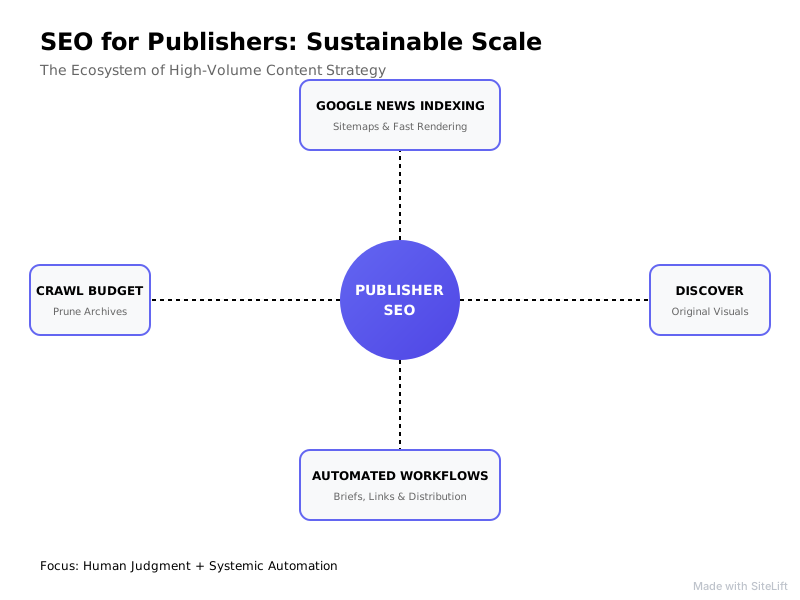
Infographic by SiteLift
| Feature | Google News / Top Stories | Google Discover |
|---|---|---|
| Intent | Active search for news | Passive interest feed |
| Lifespan | Hours to 2 days | Days to months |
| Best content type | Breaking, original reporting | Evergreen explainers, visual stories, opinion with expertise |
| Key lever | Freshness + authority + technical cleanliness | Entity interest + image quality + E-E-A-T |
| Measurement | Search Console News filter, Top Stories impressions | Search Console Discover report, CTR by image/title |
What Technical SEO for Publishers Challenges Must You Solve at Scale?
When you have 100,000+ URLs, small leaks become floods.
Managing Crawl Budget and Internal Link Equity
Crawl budget is simply how much attention Googlebot gives your site. Large publishers waste it on:
- Infinite calendar archives and author pagination
- Faceted tag combinations (
/tag/election/page/47/?sort=old) - Staging URLs, printer-friendly duplicates, and old AMP versions
- Auto-generated location pages with no original value
Fix it by:
- Noindexing thin archives, but keeping category hubs indexable
- Linking new stories from homepage, section fronts, and relevant evergreen hubs within hours
- Using Lastmod correctly in sitemaps — only update when content meaningfully changes
- Consolidating duplicate wire stories with canonicals to your canonical version
Think of internal links as editorial votes. Every important new investigation should get links from older, authoritative evergreen pieces, not just sit orphaned in “Latest News.”
Handling Content Decay and Pruning Old Archives
Content decay kills digital publishing growth silently. A 2019 “Best VPNs” guide still ranking #9 drags down your topical authority if it’s outdated.
Run a quarterly audit:
- Keep and update: High impressions, declining CTR, still relevant topic. Refresh stats, screenshots, quotes.
- Consolidate: Five thin 400-word takes on one topic. Merge into one definitive hub and 301 redirect.
- Noindex: Time-sensitive event coverage with no links and no traffic. Keep for users, remove from search.
- Delete + 410/404: Spammy, inaccurate, or auto-generated filler with no value.
Publishers are often afraid to delete. Don’t be. A leaner, fresher archive almost always lifts the whole domain.
Optimizing Core Web Vitals for Ad-Heavy Sites
Ads pay salaries, but layout shift and heavy scripts murder rankings and revenue both.
According to Google’s developer documentation on Core Web Vitals, sites that meet Core Web Vitals thresholds see up to 24% lower abandonment rates. For publishers, that’s directly more ad viewability and subscriptions. See Google’s guidance on Core Web Vitals and page experience for thresholds.
What works on ad-heavy templates:
- Reserve fixed-height slots for ads to prevent CLS
- Lazy-load below-the-fold ads and videos
- Defer non-critical third-party scripts; audit your consent manager
- Inline critical CSS for article template; preconnect to image CDN
- Serve AVIF/WebP hero images with explicit width and height
Pro Tip: Test your worst template, not your best article. Your live blog and video embed templates usually fail INP and LCP first — fix the template once and you fix 10,000 pages.
How to Measure Success in SEO for Publishers?
Monthly rank reports are useless when your traffic changes hourly.
Tracking Real-Time Keyword Momentum
Publishers need to see momentum, not just positions.
I track:
- Top Stories appearances by section in the last 24h
- New keywords gained per story within 6 hours of publish
- Evergreen hubs gaining or losing top 3 positions week over week
- Internal link clicks from hubs to fresh stories
If a story isn’t indexed in 30 minutes or isn’t getting impressions in 3 hours, that’s an operational alert — check sitemap, rendering, or duplication — not a “wait and see” moment.
Analyzing Referral Traffic from Google Discover
In Search Console, open the Discover report separately from Search. Look at:
- Which images and titles earn high CTR (rewrite the losers)
- Which topics recur (double down with follow-ups and hubs)
- Discover vs. Search overlap (stories that win both deserve updating)
Don’t chase every spike. Build playbooks from patterns: listicles with custom photography, first-person tests, timely explainers tied to news events.
Key Performance Indicators (KPIs) for Editorial Teams
Toxic KPI: “Write 8 posts a day and hit 500k clicks.”
Healthy KPIs I recommend:
- % stories indexed in <1 hour
- Update win rate: % refreshed articles that regain traffic in 30 days
- Discover loyalty: returning Discover sessions per topic
- Newsletter conversion from search: turning fly-by readers into subscribers
- Internal recirculation: clicks per session from related links
Tie bonuses to updates and depth, not just volume. Writers will stop churning thin takes when you reward maintenance.
My Honest Take: Automation Won't Kill Journalism — Burnout Will
I’ll be direct because I’ve watched this play out inside real newsrooms.
Most publishers don’t have an SEO knowledge problem. They have an energy problem. Brilliant reporters spend 40% of their day wrestling with CMS fields, finding stock photos, pasting internal links, rewriting meta titles for the fifth time, and wondering why a great investigation got zero traffic because someone forgot to add it to the sitemap.
That’s soul-crushing. And it’s fixable.
I’m firmly in the camp that journalists should do less SEO manual labor, not more. Give them sharp briefs, clean templates, and instant feedback, then trust them to report. Let autonomous systems handle the repetitive pipeline — clustering topics, suggesting links, generating summaries, monitoring decay, distributing to networks — while editors keep final say on everything that touches credibility.
When I see a site publishing 100 AI-assisted commodity rewrites a day with no original reporting, I don’t think “smart automation.” I think short-term arbitrage that will get crushed by the next helpful content update. When I see a lean team of eight using automation to publish 12 strong stories, keep 300 evergreen guides fresh, and own three beats completely, I think that’s the future of digital publishing growth.
My rule is simple: if a task doesn’t require judgment, it shouldn’t require a journalist. Automate it, document it, and give that time back to interviews, analysis, and storytelling. That’s how you scale high volume content output without losing the people who make it worth reading.
— sitelift.io
Scale Without the Grind: A Calmer Way to Grow
You don’t need a 40-person SEO team to compete. You need a pipeline that never sleeps.
That’s what we built sitelift.io for — an autonomous SEO and AI visibility growth platform that generates targeted content, distributes it across a curated premium network, integrates with popular CMS platforms, and tracks keyword momentum in real time. For publishers, that means briefs, optimization, internal linking, publishing, and distribution handled on autopilot while your editors focus on voice and original reporting.
If breaking news is burying your evergreen strategy, start by automating one workflow: refresh alerts, internal linking, or News sitemap health. Compounding starts there.

FAQ
How does SEO for publishers differ from traditional SEO?
Traditional SEO optimizes a small set of stable pages over months. SEO for publishers optimizes thousands of fast-decaying stories in minutes. You have to master freshness signals, Top Stories eligibility, Discover optimization, crawl budget, and large-scale internal linking — while keeping editorial quality high under daily deadlines.
How do I get my publication indexed in Google News?
You don’t need to apply anymore, but you must meet technical and trust bars. Publish original news with clear dates, bylines, and author bios, maintain a Google News XML sitemap for the last two days, ensure fast rendering without login walls blocking Googlebot, and add NewsArticle schema. Then monitor indexing in Search Console and the Publisher Center.
What is crawl budget and why does it matter for publishers?
Crawl budget is the time and resources Google allocates to crawling your site. With 50k to millions of URLs, publishers can waste it on paginated archives, tag spam, and duplicates, leaving fresh money stories uncrawled. Tighten navigation, noindex thin archives, fix sitemap Lastmod dates, and link new stories from authoritative hubs to prioritize what matters.
How can publishers use AI in their workflows without risking Google penalties?
Use AI for assistance, not autopilot publishing. Safe uses include briefs, transcription, title variations, summaries, internal link suggestions, and decay alerts. Always add original reporting, expert quotes, and human editing. Disclose processes internally, avoid mass-produced commodity rewrites, and focus on E-E-A-T: experience, expertise, authoritativeness, and trustworthiness.
How do you optimize content specifically for Google Discover?
Focus on entity interests, not just keywords. Use large original images over 1200px wide, write honest but curiosity-driven headlines, avoid clickbait and sensational health or finance claims, build topical authority with evergreen hubs, and keep author expertise visible. Track the Discover report in Search Console to double down on formats and topics that earn repeat CTR.
Topics Covered:
- seo for publishers
- digital publishing growth
- high volume content output
- google news indexing
- automated editorial workflows
More from SiteLift

AI for SEO: How to Automate Research, Content Creation and Distribution
Learn how to use AI for SEO to automate keyword research, generative content creation, CMS publishing, and search engine visibility.

SEO Tools in 2026: How to Build an Autonomous Stack That Grows Traffic on Autopilot
Discover how to build an autonomous stack with modern AI SEO tools, automated publishing workflows, and real-time rank tracking to grow organic traffic.

Repurposing Content for SEO: How to Multiply Organic Reach Across Channels
Learn how repurposing content for SEO multiplies organic reach. Discover step-by-step strategies for syndication, AI visibility, and automation.