AI for SEO: How to Automate Research, Content Creation and Distribution

For years, organic search teams have been trapped in a tedious, manual loop: spending days on keyword spreadsheets, drafting content line by line, wrestling with CMS formatting, and retrofitting internal links. Implementing ai for seo isn't just about using a chatbot to churn out generic paragraphs. It represents a fundamental shift from manual, task-driven optimization to a fully autonomous seo workflow that scales your organic reach exponentially.
By combining large language models (LLMs), machine learning clustering algorithms, and programmatic publishing pipelines, modern search teams are building systems that discover opportunities, draft E-E-A-T-compliant assets, and distribute content with minimal manual overhead.
Here is a quick look at how traditional organic search workflows compare to modern AI-driven execution:
| Search Pillar | Traditional SEO Workflow | Autonomous AI SEO Engine |
|---|---|---|
| Keyword Research | Manual seed phrase expansion in spreadsheets | Programmatic semantic clustering and real-time intent mapping |
| Content Creation | Manual drafting taking 8–15 hours per asset | Generative AI content tailored to brand voice in minutes |
| Technical & Schema | Manual JSON-LD drafting and one-off plugin setup | Automated entity mapping and programmatic schema injection |
| Publishing & Internal Links | Manual copy-pasting into CMS and manual link insertions | Automated multi-CMS deployment with dynamic PageRank routing |
| Optimization Focus | Traditional Google 10-blue-links SERPs | Dual optimization for Google SERPs and AI Answer Engines (GEO) |
What Is AI for SEO and Why Is It Transforming Organic Growth?
At its core, ai for seo is the integration of artificial intelligence, machine learning, and natural language processing into every phase of the search engine optimization lifecycle. Instead of treating software as a passive tool where humans perform every manual step, AI-driven architectures turn search strategy into a continuous, data-informed feedback loop.
According to a survey by Gartner, over 80% of enterprise leaders plan to deploy generative AI applications or APIs in production by 2026. Search engine optimization is at the very center of this transformation, as algorithms become capable of handling complex research and technical execution at scale.
+-------------------------------------------------------------------+
|                   AUTONOMOUS AI SEO PIPELINE                       |
+-------------------------------------------------------------------+
|  [ 1. Discovery ]  --> AI Intent & Semantic Keyword Clustering   |
|  [ 2. Generation ] --> Brand-Voiced, E-E-A-T Draft Engine        |
|  [ 3. Technical ]  --> Automated Schema & Dynamic Internal Links |
|  [ 4. Publishing ] --> Multi-CMS Syndication & Direct Indexing   |
|  [ 5. Analytics ]  --> GEO & SERP Dual-Visibility Tracking       |
+-------------------------------------------------------------------+
The Evolution from Manual Optimization to Autonomous SEO Workflows
Traditional SEO relies heavily on human bandwidth. A strategist finds keywords, a writer drafts the article, an editor reviews it, a webmaster formats it in the CMS, and an SEO analyst manually places internal links. This manual relay race limits how fast a site can grow.
An autonomous seo workflow removes these bottlenecks. Instead of treating each step as a separate task, an autonomous engine connects seed topics directly to published, structured content. Research from McKinsey & Company estimates that marketing and sales will see one of the highest economic impacts from generative AI, potentially adding hundreds of billions in value annually. By letting AI handle repetitive research, draft generation, and technical distribution, organic growth becomes a predictable systems challenge rather than a manual labor issue.
Understanding Traditional SEO vs. AI Visibility Optimization (GEO)
Search engine optimization is no longer limited to winning ten blue links on Google. The rise of search engines like ChatGPT, Perplexity, Claude, and Google AI Overviews has created a new discipline: Generative Engine Optimization (GEO) or ai visibility optimization.
TRADITIONAL SEO                     GENERATIVE ENGINE OPTIMIZATION (GEO)
+------------------------+          +------------------------------------+
| Focus: Keywords & Links|          | Focus: Entities, Facts & Citations |
| Goal: Rank in Top 10   |          | Goal: Cited as Direct Answer Source|
| Crawlers: Googlebot    |          | Crawlers: GPTBot, PerplexityBot    |
+------------------------+          +------------------------------------+
Traditional SEO focuses on keyword placement, backlinks, and click-through rates. GEO, on the other hand, focuses on:
- Information Density: Providing clear, unambiguous factual answers that LLMs can extract easily.
- Entity Clarity: Using structured data so AI models understand exactly how your brand relates to concepts, products, and industry topics.
- Citation Readiness: Structuring content with clear headings, concise definitions, and authoritative references that answer engines quote directly.
Winning in search today requires optimizing for both traditional web crawlers and modern generative answer engines simultaneously.
The Business Impact: Compounding Authority at Unprecedented Scale
When you automate keyword research, content production, and site distribution, you unlock compounding search authority. Rather than publishing two or three articles a week, an automated engine allows you to cover entire topical clusters in days.
This speed changes the economics of organic search. Expanding your content coverage across hundreds of long-tail queries helps your site establish topical authority faster. As search engines recognize your depth of coverage across an entire subject, your domain's baseline rankings rise across all related terms.
How Can You Automate Keyword Research and Intent Analysis with AI for SEO?
Keyword research used to mean downloading massive CSV files from tools like Ahrefs or Semrush and manually color-coding them in Excel. Modern ai seo automation replaces manual spreadsheet filtering with semantic understanding.

Scalable Keyword Clustering and Semantic Search Analysis
Search engines no longer view queries as isolated strings of text; they view them as interconnected concepts and entities. Modern AI tools analyze search results at scale to group thousands of keywords into distinct semantic clusters based on shared user intent.
Instead of writing five separate articles targeting slightly different variations of the same phrase, AI clustering tools identify the core concept behind thousands of searches. They group these keywords into a single master outline that targets primary, secondary, and long-tail terms in one comprehensive asset.
Automating Competitor Content Gap Identification
Finding what your competitors are missing used to take hours of manual reading. Generative models can evaluate top-ranking pages across dozens of queries at once, identifying exact topics, logical angles, or datasets that competitors have overlooked.
AI algorithms compare the top 10 search results for a topic against your existing content architecture to pinpoint:
- Unanswered sub-topics and missing long-tail questions.
- Outdated statistics or references on competitor sites.
- Weak user intent alignment in top-ranking pages.
- Opportunities to introduce proprietary data or distinct points of view.
Real-Time Search Intent and Momentum Tracking
Search intent isn't static. A keyword that demanded a simple definition last year might demand a comparison guide or workflow template today. AI tools monitor changes in search engine result pages (SERPs) in real time, detecting subtle shifts in search intent as they happen.
By analyzing search result changes continuously, automated pipelines alert teams when a high-value keyword shifts intent or when a competitor begins pulling ahead. If you want to dive deeper into monitoring rankings across modern search engines, read our guide on how to track search engine rankings in real-time.
How Do You Create High-Ranking Generative AI Content That Satisfies E-E-A-T?
One of the biggest misconceptions about generative ai content is that it inherently produces low-quality text that search engines penalize. In reality, search engines evaluate the final quality and utility of the content, regardless of how it was generated.
   RAW TOPIC SEED
         │
         ▼
+─────────────────+
| Semantic Engine | ──> Ingests SERP Entities & Content Gaps
+─────────────────+
         │
         ▼
+─────────────────+
| Style & Voice   | ──> Applies Custom Rules, Tone & Banned Words
+─────────────────+
         │
         ▼
+─────────────────+
| E-E-A-T Injector| ──> Adds First-Party Data & Expert Proof
+─────────────────+
         │
         ▼
  PUBLICATION-READY
     AI ARTICLE
According to HubSpot industry research, 75% of marketers using AI report that generative tools significantly accelerate their content creation process. The key is creating structured workflows that keep content helpful, accurate, and aligned with human search intent.
Aligning AI Content Generation with Google's Helpful Content System
Google's explicit stance, published in the Google Search Central guidelines, focuses on content quality rather than how content is produced. Google rewards original, high-quality material that demonstrates Experience, Expertise, Authoritativeness, and Trustworthiness (E-E-A-T), regardless of whether it was created by humans or AI.
To make sure generated drafts succeed in organic search, build automated workflows that prioritize:
- Direct Answers: Providing clear answers to primary user queries near the top of the article.
- Logical Heading Structures: Using descriptive subheadings (H2, H3, H4) that outline topics clearly for crawlers and readers.
- Comprehensive Coverage: Addressing common follow-up questions directly within the text.
Pro Tip: Never publish raw outputs directly from basic LLM prompts. Build structured multi-step pipelines that generate comprehensive outlines, run semantic entity expansion, and verify facts before drafting content.
Programmatic Article Generation with Custom Brand Voice Controls
The most common issue with basic AI writing is a generic, robotic tone. To produce high-ranking assets, your generation engine needs strict brand voice rules.
A structured AI generation pipeline should strictly control:
- Tone Guidelines: Enforcing natural, clear, and direct conversational tone while avoiding fluff.
- Formatting Rules: Enforcing short paragraphs (2–4 sentences), bulleted lists, and clear bold key phrases.
- Banned Phrase Lists: Automatically filtering out common AI clichés (such as "In today's digital landscape," "delve," "testament," or "In conclusion").
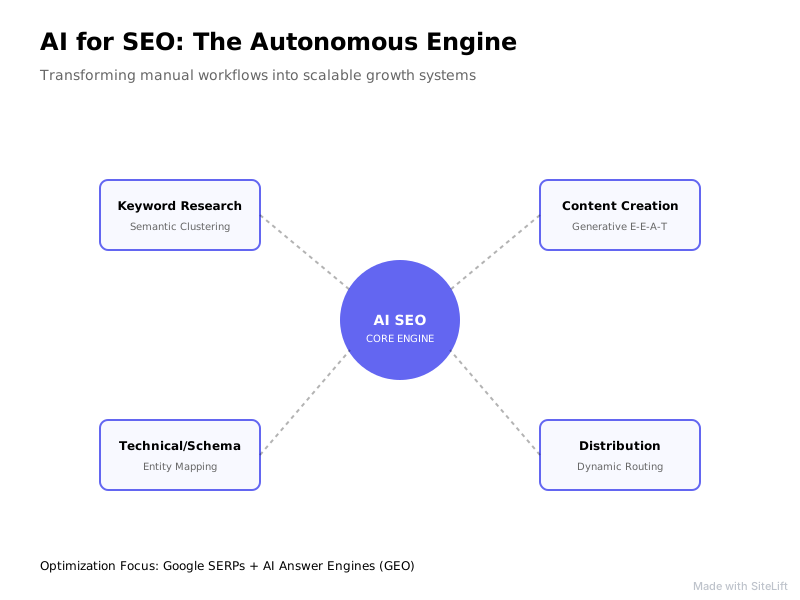
Infographic by SiteLift
Injecting Unique First-Party Data and Expert Insights into AI Drafts
Generic information creates generic search results. To build strong search authority, incorporate proprietary business insights, original customer data, and unique brand commentary directly into your drafts.
| Content Element | Generic AI Output | E-E-A-T Enhanced AI Output |
|---|---|---|
| Data & Stats | Unsourced or outdated general statistics | Cites named, authoritative sources with direct links |
| Examples | Vague, hypothetical scenarios | Real-world industry case studies with specific outcomes |
| Tone & Voice | Passive, overly complex academic language | Direct, first-person expert guidance and actionable advice |
| Formatting | Dense blocks of wall-to-wall text | Skimmable tables, bullet points, callout boxes, and bold key terms |
By feeding proprietary data into your generation system, your automated engine turns raw stats into clear narrative points, original charts, and expert commentary that AI search engines love to cite.
How Do You Automate SEO Content Distribution and Technical Execution?
Creating high-quality content is only half the battle. If your publishing, technical schema, and internal linking processes are manual, your pipeline will quickly break down.
Seamless Multi-CMS Publishing Integration
A complete ai seo automation pipeline connects directly to your content management system. Modern publishing setups use webhooks and direct API connections to push articles straight into platforms like WordPress, Webflow, Shopify, or custom headless systems.
Automated CMS deployment handles formatting tasks behind the scenes:
- Mapping custom HTML fields, excerpt descriptions, and author credentials.
- Formatting inline bullet lists, quotes, and comparative tables cleanly.
- Handling featured image alignment, alt tags, and responsive image sizing.
Automated Internal Linking and Structured Data (Schema)
Internal links pass authority across your domain, showing search engines how topics connect. Manually adding internal links across hundreds of articles is slow and easy to forget. An automated system evaluates your site's complete content architecture to insert relevant internal links dynamically as new content goes live.
NEW ARTICLE PUBLISHED
         │
         ▼
+─────────────────────────────────+
| Dynamic Link Analysis Engine    |
+─────────────────────────────────+
         │
         ├──────────────────────────────────────────┐
         ▼                                          ▼
+──────────────────────────────────+     +──────────────────────────────────+
| Scans New Article for Mentions   |     | Scans Existing Domain Library     |
| of Existing High-Value Pages     |     | for Mentions of New Article      |
+──────────────────────────────────+     +──────────────────────────────────+
         │                                          │
         └────────────────────┬─────────────────────┘
                              ▼
        +───────────────────────────────────────────+
        | Contextual In-Text Anchor Links Inserted  |
        | Programmatically Across Both Directions    |
        +───────────────────────────────────────────+
Structured data (JSON-LD schema markup) is equally important. Schema acts as a direct translation layer for both search bots and AI answer engines. To learn more about modern technical standards, check out our guide on Modern Technical SEO Services for AI Search.
Indexing Signals and Off-Page Network Syndication
Publishing content is useless if search engines take weeks to crawl and index it. An automated distribution engine speeds up discovery by:
- Pinging search engine APIs immediately upon publication for instant URL crawling.
- Updating dynamic XML sitemaps automatically to reflect fresh site additions.
- Syndicating core content insights across authoritative off-page networks to generate secondary discovery signals.
What Does a Complete Autonomous SEO Workflow Look Like in Practice?
Bringing research, creation, and distribution together into a single pipeline turns manual SEO into a scalable growth engine. Here is how an end-to-end autonomous architecture operates.
+─────────────────────────────────────────────────────────────────────────+
|                      END-TO-END AUTONOMOUS ENGINE                       |
+─────────────────────────────────────────────────────────────────────────+
| 1. KEYWORD & INTENT DISCOVERY                                           |
|    - Cluster seed phrases & scan competitor content gaps                |
|                                                                         |
| 2. PROGRAMMATIC CONTENT GENERATION                                      |
|    - Apply custom brand tone, inject first-party data, satisfy E-E-A-T   |
|                                                                         |
| 3. TECHNICAL SCHEMA & LINKING                                           |
|    - Generate Article/FAQ JSON-LD & route internal PageRank links       |
|                                                                         |
| 4. MULTI-CMS PUBLISHING & INDEXING                                      |
|    - Direct API push to Webflow/WordPress & instant Indexing API pings  |
|                                                                         |
| 5. CONTINUOUS MONITORING & DECAY REFRESH                                |
|    - Monitor SERP & GEO citations, auto-trigger updates when decaying   |
+─────────────────────────────────────────────────────────────────────────+
Step-by-Step Architecture of an End-to-End AI SEO Pipeline
- Keyword & Intent Discovery: The engine continuously scans search results to identify high-value keyword clusters, user questions, and content gaps in your niche.
- Programmatic Content Generation: The platform builds structured outlines and drafts comprehensive assets using custom brand rules, incorporating first-party data and accurate citation links.
- Technical Schema & Internal Linking: The system injects relevant JSON-LD schema markup (Article, HowTo, FAQ) and routes contextual internal links across your domain.
- Multi-CMS Publishing & Indexing: Content is pushed directly to your CMS via automated APIs, triggering instant indexing requests to search engine crawlers.
- Continuous Monitoring & Decay Refresh: The system tracks rankings across SERPs and AI engines, triggering automated content updates whenever rankings slip or intent shifts.
Monitoring AI Visibility and Traditional Organic Rankings Side-by-Side
Tracking organic growth today requires looking beyond traditional keyword positions. Modern dashboards monitor two parallel sets of performance metrics:
PERFORMANCE MONITORING DASHBOARD
┌──────────────────────────────────────┬──────────────────────────────────────┐
| Traditional Search Metrics           | AI Engine Visibility Metrics (GEO)   |
├──────────────────────────────────────┼──────────────────────────────────────┤
| • Google SERP Position (Top 1-10)    | • Perplexity Citation Rate           |
| • Organic Click-Through Rate (CTR)   | • ChatGPT Search Source Mentions     |
| • Organic Impression Volume          | • Google AI Overview Citation Rate   |
| • Target Keyword Ranking Position    | • Brand Entity Mention Frequency     |
└──────────────────────────────────────┴──────────────────────────────────────┘
Want to test how prepared your current site is for AI answer engines? Try our free AI Readiness Checker to see how effectively your content can be read and cited by modern AI crawlers.
Automating Content Decay Prevention and Systematic Refreshing
Search rankings rarely stay static forever. As competitors publish new assets and search intent evolves, older articles lose ranking momentum—a phenomenon known as content decay.
An automated SEO pipeline solves this by comparing daily ranking data against traffic metrics. When an asset drops below target thresholds, the system triggers an update:
- Re-analyzing top-ranking pages to find missing sub-topics.
- Updating outdated statistics, figures, and internal links.
- Adding fresh Q&A blocks tailored to real-time search queries.
- Re-publishing refreshed drafts and notifying search crawlers immediately.
Why Disjointed AI Tools Are Holding Teams Back
Having audited dozens of modern content pipelines, I frequently see teams make the same mistake: assembling a messy collection of single-purpose AI tools. They use one tool for keyword ideas, a separate AI writing assistant, an external link-building tool, and a manual CMS publishing process.
This fragmented approach creates friction, human error, and massive operational delays.
THE DISJOINTED TOOL STACK (Slow & Fragile)
[ Keyword Tool ] ──(Manual)──> [ Prompt Generator ] ──(Manual)──> [ AI Writer ] ──(Manual)──> [ CMS Copy/Paste ]

VS.

UNIFIED AUTONOMOUS ENGINE (Fast & Scalable)
[ Seed Topic ] ───────────────> [ Autonomous SEO Engine ] ───────────────> [ Live Indexed Asset ]
Point-solution AI writers are overrated because generating text is only a tiny piece of the organic growth puzzle. What is drastically underrated is pipeline integration—connecting intent analysis, E-E-A-T generation, schema injection, internal linking, and publishing into a single fluid system.
If you are evaluating whether to continue managing point-solution tools, read our analysis on an automated SEO pipeline to see how unified automation compares to traditional retainers.
Pro Tip: Stop evaluating AI software based on how fast it generates paragraphs. Evaluate it on how effectively it automates your complete publishing lifecycle without breaking content quality or brand standards.
Scale Your Organic Growth Autonomously
The future of organic search belongs to teams that turn content publishing into a streamlined, automated system. Point-and-click keyword tools and manual draft generation simply cannot match the speed, depth, and precision of a unified autonomous workflow.
SiteLift provides an end-to-end autonomous SEO engine designed to handle this entire pipeline automatically. From semantic keyword clustering and E-E-A-T content generation to multi-CMS publishing, dynamic internal linking, and real-time rank tracking—SiteLift helps businesses establish organic authority and win visibility across both Google SERPs and generative AI answer engines on autopilot.
— sitelift.io
FAQ
Does Google penalize AI-generated content?
No. Google's Search Central guidelines explicitly state that search engines focus on content quality rather than how text is produced. Google penalizes low-quality content meant to manipulate search rankings, regardless of whether it was created by humans or AI. Content that demonstrates E-E-A-T, provides real value, and addresses search intent will rank well regardless of generation method.
What is the difference between traditional SEO and AI Visibility Optimization?
Traditional SEO focuses on earning high rankings on standard search engine result pages (like Google's 10 blue links) through keyword matching and backlinks. AI Visibility Optimization (or Generative Engine Optimization) optimizes content to be parsed, trusted, and cited as a direct answer source inside AI tools like ChatGPT, Perplexity, and Google AI Overviews.
How much time can an autonomous SEO workflow save my team?
An automated SEO engine reduces content production timelines by up to 80–90%. Instead of spending 10 to 15 hours per article on manual keyword research, drafting, CMS formatting, and link insertion, teams can run an autonomous pipeline that handles end-to-end publishing in minutes while keeping team members focused on high-level strategy and oversight.
Can AI fully automate the SEO content distribution process?
Yes. Modern autonomous SEO platforms use direct CMS integrations (such as webhooks and APIs for WordPress, Webflow, and custom sites) to handle content publishing, URL routing, image formatting, JSON-LD schema injection, dynamic internal linking, and immediate search engine indexing requests without requiring manual site updates.
Topics Covered:
- ai for seo
- ai seo automation
- generative ai content
- ai visibility optimization
- autonomous seo workflow
More from SiteLift

SEO Tools in 2026: How to Build an Autonomous Stack That Grows Traffic on Autopilot
Discover how to build an autonomous stack with modern AI SEO tools, automated publishing workflows, and real-time rank tracking to grow organic traffic.

Repurposing Content for SEO: How to Multiply Organic Reach Across Channels
Learn how repurposing content for SEO multiplies organic reach. Discover step-by-step strategies for syndication, AI visibility, and automation.

Fresh Content SEO: How Publishing Frequency and Recency Drive Rankings
Discover how fresh content SEO, publishing velocity, and Google's QDF algorithm impact rankings and AI search visibility. Build a scalable freshness engine.