Why B2B SaaS Brands Are Replacing Traditional B2B SEO Agencies with AI Workflows

When evaluating a traditional b2b seo agency, most SaaS founders expect predictable roadmaps and quarterly reports. Instead, they often get stuck in approval loops, pay retainer premiums for stale deliverables, and watch competitors capture low-hanging SERP positions while waiting for human analysts to catch up. The landscape has shifted. Modern SaaS teams are migrating toward autonomous AI workflows that treat search visibility as a continuous operating system rather than a periodic project. This isn't about cutting corners; it's about removing operational friction so your brand can compound organic equity at the speed of market demand.
Key Takeaways
| Traditional Agency Model | AI-Driven Workflow | Net Impact on SaaS Teams |
|---|---|---|
| Quarterly technical audits & static reporting | Continuous monitoring & real-time SERP adaptation | Faster reaction to algorithm shifts & competitor moves |
| Manual content calendars & bottlenecked approvals | Automated content pipeline with intent-based clustering | Consistent output without proportional headcount growth |
| Fixed monthly retainers ($5k–$20k+) | Usage-based scaling tied to keyword momentum & traffic | Higher ROI through compounding assets vs one-off deliverables |
| Fragmented tool stacks & manual outreach | Integrated CMS publishing + curated distribution networks | Streamlined operations with measurable pipeline contribution |
The transition from manual retainers to self-optimizing systems solves three core problems SaaS leaders face daily: slow execution cycles, misaligned KPIs, and the inability to scale content without hiring more writers or account managers. Below is a breakdown of how autonomous SEO actually works, where legacy models break down, and how you can evaluate whether your team is ready to make the switch.
What Does a Traditional b2b seo Agency Actually Do?
Core Services and Standard Deliverables
A standard engagement typically covers technical site audits, keyword research, content calendar development, on-page optimization, and off-page link building. Agencies package these into monthly deliverables, expecting clients to approve drafts, review progress reports, and wait for implementation. While this structure worked well when search algorithms changed slowly, it creates inherent lag in fast-moving verticals like enterprise SaaS. According to HubSpot’s 2023 State of Marketing Report, organic search remains the top traffic source for most businesses, yet content creation continues to rank as the number one marketing challenge. The bottleneck isn't strategy; it's throughput.
Human Bottlenecks in Reporting and Execution
Manual campaigns rely heavily on sequential approvals. A writer drafts a piece, an editor reviews it, a client requests revisions, and finally, a developer pushes updates. Each handoff introduces delays that compound quickly. More importantly, human analysts cannot monitor thousands of ranking fluctuations simultaneously. By the time a quarterly report highlights a dropped position, competitors have already optimized their metadata, refreshed outdated content, and captured the click share. Research from Ahrefs reveals that the average age of a page in the top 10 search results is 19 months, underscoring the need for consistent, compounding content updates rather than one-off agency projects. Waiting for scheduled reviews leaves revenue opportunities on the table.
Hidden Costs and Retainer Dependencies
Retainers create financial inertia. Many SaaS brands lock into six- or twelve-month contracts, paying premium rates even when campaign velocity stalls or market conditions shift. The overhead extends beyond invoices: internal marketing teams spend hours coordinating with external vendors, chasing status updates, and reconciling disparate reporting dashboards. These operational drag factors rarely show up in initial proposals but directly impact net margin. When you factor in opportunity cost, the true expense of a legacy engagement often exceeds the stated monthly fee.
How Are AI Workflows Improving SaaS Search Visibility?
From Static Audits to Autonomous Optimization
Traditional SEO treats optimization as a snapshot. AI workflows treat it as a live feed. Instead of relying on biannual crawls, autonomous platforms continuously monitor SERP volatility, track competitor schema changes, and detect ranking drops before they impact qualified traffic. Machine learning models identify patterns across thousands of signals, prioritizing fixes that move needles rather than polishing minor metadata tweaks. This shift from reactive to proactive optimization is critical for brands competing in crowded B2B categories.
Real-Time Keyword Momentum Tracking
Ranking stability doesn't happen by accident. It requires constant calibration based on search intent shifts, seasonal demand, and algorithmic updates. Gartner predicts that by 2025, generative AI will power 80% of marketing technology platforms, fundamentally changing how content and SEO workflows operate. Platforms that track keyword momentum in real-time adjust targeting automatically, surfacing high-intent queries before competitors notice them. For SaaS companies, this means capturing bottom-funnel commercial terms earlier in the buyer journey. As noted by industry researchers at Search Engine Land, algorithm updates increasingly reward sites that demonstrate rapid adaptation and fresh topical relevance over static authority scores.
Dynamic Technical and On-Page Adjustments
Technical debt accumulates silently. Broken redirects, crawl budget waste, and unoptimized core web vitals quietly suppress rankings until a manual audit catches them. Autonomous systems detect these issues instantly and apply standardized fixes without waiting for developer bandwidth. Structured data markup, canonical tag corrections, and internal linking architectures update dynamically as new pages enter the index. This continuous maintenance ensures that your technical foundation scales alongside your content footprint.

How Does an Automated Content Pipeline Drive b2b Organic Acquisition?
Generating High-Intent, Topic-Clustered Content at Scale
Content production breaks down when teams chase arbitrary word counts instead of search intent. An automated content pipeline starts with intent mapping, grouping keywords into tightly interlinked topic clusters that align with your product's solution architecture. Instead of publishing isolated blog posts, the system generates comprehensive resource pages, comparison guides, and problem-solution articles that collectively dominate specific search verticals. This clustering approach signals topical authority to search engines while giving buyers a complete journey through awareness, consideration, and decision stages.
Seamless CMS Integration and Instant Publishing
Manual publishing requires exporting drafts, formatting in editors, and manually pushing to WordPress or Webflow. Integrated pipelines connect directly to your existing CMS, applying brand templates, inserting tracked UTM parameters, and scheduling publication windows automatically. Some platforms also sync with help documentation, changelogs, and API references to surface technical details that generic writers miss. The result is a publishing cadence that matches your engineering release cycle rather than waiting for freelance availability.
Distributing Across Premium Networks Without Manual Outreach
Visibility multiplies when content reaches authoritative third-party channels. Traditional link building relies on cold emails, relationship nurturing, and unpredictable placement rates. Automated distribution networks route optimized assets to curated publisher tiers based on domain authority, audience overlap, and historical performance metrics. This amplification accelerates indexing, strengthens referral signals, and builds contextual backlinks without requiring sales outreach. When paired with internal linking automation, these external placements compound your domain rating faster than manual tactics ever could.
Pro Tip: Don't treat distribution as an afterthought. Align your content cluster topics with the primary use cases your sales team hears daily. Intent alignment beats volume every time.
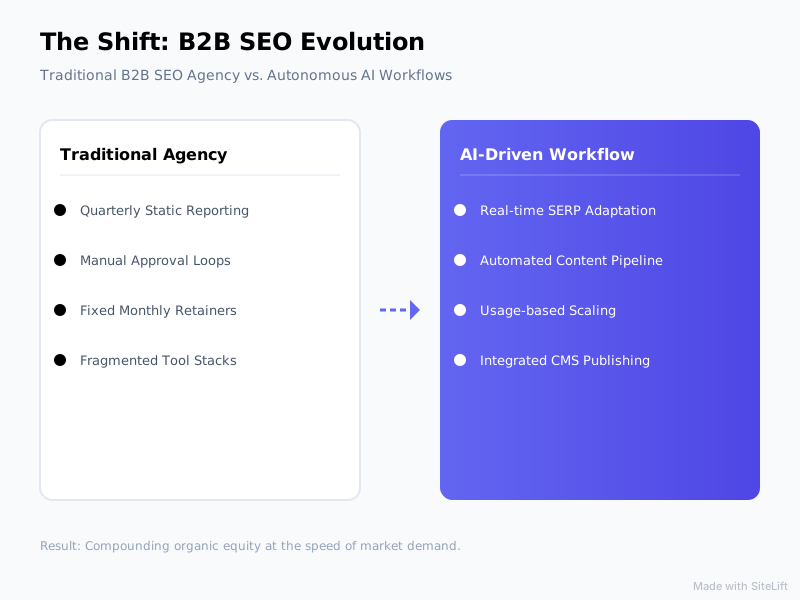
Infographic by SiteLift
What Is the Real Impact on b2b Lead Generation and ROI?
Measuring Performance Beyond Vanity Metrics
Traffic spikes look impressive on dashboard screenshots but mean little if they don't convert. Successful SaaS teams tie organic growth directly to pipeline contribution, tracking assisted conversions, demo requests, and free trial activations attributed to specific landing pages. Automated workflows attach unique identifiers to each content asset, enabling precise attribution modeling. You stop guessing which pieces drive revenue and start doubling down on what actually moves prospects through your funnel.
Compounding Traffic and Domain Authority Growth
One-off deliverables decay quickly. Evergreen resources, however, accumulate links, social shares, and internal referrals over time. Studies consistently show that pages ranking in position #1 on Google receive an average of 31.7% of all clicks, highlighting the high stakes of sustained organic visibility. Autonomous platforms prioritize long-form, highly referenced assets that build structural authority. As your domain rating climbs, lower-tier keywords begin converting organically, reducing customer acquisition cost across the board.
Faster Time-to-Value Compared to Agency Timelines
Traditional engagements require months of setup, testing, and calibration before seeing meaningful lift. Autonomous systems deploy initial content clusters within days, establish baseline tracking immediately, and begin accumulating ranking signals almost overnight. Data from Forrester research on marketing automation shows that companies implementing automated content and lead nurturing workflows see up to a 451% increase in qualified leads compared to non-automated campaigns. Speed compounds. Early wins fund further expansion, creating a flywheel effect that manual retainers struggle to replicate.
Should You Replace a b2b seo Agency with AI Automation?
Evaluating Team Size, Budget, and Technical Maturity
Not every organization is ready to go fully autonomous. Startups with lean teams benefit most from hands-free execution, while mature enterprises may require custom integrations, compliance guardrails, or multi-market localization. Assess your current tech stack maturity first. If your CMS lacks API access, your analytics environment is fragmented, or your brand guidelines contradict automated templating, you'll face friction during migration. Build a simple decision matrix: rank your needs against platform capabilities, then pilot with a single product line or geographic region before full rollout.
When Human Expertise Still Adds Value
AI excels at scale, consistency, and pattern recognition. It struggles with nuanced brand voice calibration, complex regulatory compliance, and high-stakes technical migrations involving legacy codebases. Specialized consulting remains necessary when restructuring site architecture, handling international tax or privacy requirements, or negotiating enterprise partnership placements. Think of AI as your execution engine and human strategists as your navigators. The optimal model blends both: machines handle the heavy lifting, while senior marketers focus on positioning, messaging, and cross-channel alignment.
Transition strategies work best when phased. Start by replacing manual content production and routine technical checks. Gradually layer in distribution automation and real-time tracking. Maintain hybrid reporting during the transition period to validate performance against baseline metrics. This approach preserves strategic direction while eliminating operational drag.
My Take: I've watched too many SaaS founders burn budget on agencies that measure success by slide decks rather than pipeline impact. The shift toward autonomous SEO isn't about replacing judgment; it's about removing friction. When you stop paying for delayed approvals and stale reporting, you free up capital to invest in product-led growth and customer experience. Search visibility should feel like infrastructure, not a vendor relationship. Treat it that way, and your organic acquisition costs will drop while your market share expands.
If your team is ready to replace fragmented vendor management with a unified, self-optimizing system, exploring affordable search engine optimization services for startups or reviewing how to identify high-value organic search keywords on autopilot provides a practical starting point. The goal isn't to abandon expertise—it's to automate the repetitive parts so your people can focus on what actually moves revenue.
Building a sustainable organic growth engine requires tools that operate at the speed of your market. Platforms designed for autonomous visibility handle the heavy lifting: generating targeted content, distributing across premium networks, integrating with your existing CMS, and tracking keyword momentum in real time. The result is a complete end-to-end publishing pipeline that compounds traffic and authority without requiring manual intervention. You can explore how modern search engine optimisation solutions transform enterprise traffic, or compare traditional agency models against autonomous platforms in our analysis of SEO services London. The infrastructure exists. The only variable left is execution speed.
FAQ
What exactly does a traditional b2b seo agency handle versus an AI-powered workflow?
Traditional agencies manage manual audits, content calendar planning, draft approvals, and outreach-based link building. AI-powered workflows automate technical monitoring, content generation, CMS publishing, distribution routing, and real-time ranking adjustments. The difference lies in execution speed and scalability: agencies rely on sequential human steps, while AI systems run parallel, continuous loops.
How long does it take to see measurable results from an automated content pipeline compared to agency services?
Agency campaigns typically require 3–6 months of calibration before showing consistent lift due to approval delays and batch publishing. Automated pipelines begin indexing within days, with measurable traffic gains often appearing within 4–8 weeks as keyword momentum compounds. Early results vary by competition level, but the trajectory is steeper because updates happen continuously rather than quarterly.
Can AI completely replace link building and technical SEO audits for enterprise SaaS brands?
AI handles routine technical audits and automated distribution-backed link acquisition efficiently. However, complex technical migrations, legacy architecture restructuring, and high-authority partnership placements still benefit from specialized human oversight. Most successful teams use AI for scale and reserve human consultants for strategic interventions and compliance validation.
What metrics should B2B marketing teams track to accurately measure organic acquisition success?
Move beyond impressions and bounce rate. Track assisted conversions, demo request attribution, free trial activation rates, and cost per acquired customer tied to specific landing pages. Monitor keyword momentum shifts, domain rating progression, and content decay rates to validate long-term compounding effects. Revenue attribution models beat vanity dashboards every time.
Is it safe to rely on AI-generated content for compliance-heavy or highly technical saas search visibility campaigns?
Yes, provided you implement editorial guardrails. Use structured templates, enforce brand voice guidelines, and require subject-matter expert reviews for regulated topics. AI excels at structuring information and maintaining consistency; human specialists validate accuracy and compliance. Combining both approaches ensures safety without sacrificing scale.
— sitelift.io
Topics Covered:
- b2b seo agency
- b2b lead generation
- saas search visibility
- b2b organic acquisition
- automated content pipeline
More from SiteLift

International Organic Expansion: Scaling Global SEO Without Massive Agency Retainers
Execute international search expansion with proven technical steps, automated localization, and cross-border growth tactics. Start scaling today.

The Modern Guide to White Label SEO: Automating Client Success at Scale
Learn how to scale your agency with white label SEO. Discover automated fulfillment, content marketing, and reporting strategies that maximize profit.

Scaling E-Commerce Search Traffic: Agency Retainers vs Content Automation
Compare a traditional ecommerce seo agency with automated content scaling. Discover how to grow your e-commerce organic traffic at scale.