How to Optimize SEO Product Pages for Maximum Search Visibility and Conversions

When you run an e-commerce business, your product pages are the digital equivalent of your storefront shelves. Yet, so many brands treat them as an afterthought, pasting in manufacturer descriptions and hoping for the best. To build high-performing seo product pages, you must marry technical search engine optimization with high-converting user experience.
In this guide, we will walk you through a step-by-step framework to dramatically improve your search visibility, win the click in search results, and turn casual browsers into paying customers.
Prerequisites: What You Need Before Optimizing SEO Product Pages
Before rewriting descriptions or tweaking your structured data, you must establish a clean technical baseline. Without this, even the most beautifully written copy will struggle to rank.
Audit Current Technical Health & Indexation
Search engine crawlers must be able to discover, read, and index your product pages without getting trapped in infinite loops. Common technical bottlenecks include faceted navigation (filters for size, color, or price) that generate millions of duplicate URLs.
Ensure your robots.txt file is configured correctly, and that your primary product URLs are clean, crawlable, and not blocked by accidental noindex tags. If you are unsure where your technical setup stands, you can master the ultimate technical SEO checklist to audit your store's crawl budget and indexation pipeline.
Establish Baseline Conversion and Ranking Metrics
You cannot improve what you do not measure. Before making any on-page changes, set up Google Search Console (GSC) and Google Analytics 4 (GA4) to track your current performance.
| Metric to Track | Tool | Why It Matters |
|---|---|---|
| Organic Impressions & Clicks | Google Search Console | Measures search engine visibility and click-through rates (CTR). |
| E-commerce Organic Rankings | GSC / Position Tracker | Monitors where your primary product keywords sit in search results. |
| Conversion Rate (CR) | Google Analytics 4 | Tracks the percentage of organic visitors who actually make a purchase. |
| Average Order Value (AOV) | GA4 / CMS | Ensures that your traffic optimizations are attracting high-value buyers. |
Step 1: Perform Intent-Driven Keyword Research for Product Pages
Keyword research for e-commerce is fundamentally different from keyword research for a blog. When optimizing product pages, you are targeting users at the very bottom of the marketing funnel. They are ready to buy—you just need to show them you have exactly what they are looking for.
Identify High-Intent Transactional Keywords
Informational queries like "how to clean leather boots" belong on a blog. Transactional queries like "waterproof black leather Chelsea boots size 10" belong on a product page.
To find these high-intent targets:
- Look for transactional modifiers such as "buy," "price," "online," "sale," or specific attributes like colors, sizes, and materials.
- Analyze your internal site search data to see exactly what terms your current customers use to find your products.
- Use keyword research tools to evaluate search volume, but prioritize search intent over raw volume. A term with 50 monthly searches that has 100% purchase intent is far more valuable than a term with 5,000 searches that is purely informational.
Map Long-Tail Variants to Specific SKUs
Once you have identified your primary transactional keywords, map them directly to specific SKUs. Do not try to optimize a single product page for five different styles of shoes. Instead, dedicate each page to a precise product name and its unique attributes. This targeting allows you to capture highly specific, long-tail search queries that convert at a much higher rate because the searcher's intent perfectly matches the page content.
Step 2: Implement Advanced Product Schema Markup on SEO Product Pages
If you want your products to stand out in a crowded search engine results page (SERP), you need product schema markup. Structured data translates your page content into a machine-readable language that search engines use to display rich snippets, such as star ratings, real-time pricing, and stock availability directly in search results.
Research from Search Engine Land indicates that search results with structured product schema markup experience up to a 30% higher click-through rate.
Add Essential Schema Properties
To trigger these rich results, you must implement the Product schema type. At a minimum, your JSON-LD code should include the following properties:
- Name, Image, and Description: Basic details identifying the item.
- Offers: This nested schema contains the
price,priceCurrency, andavailability(e.g.,InStockorOutOfStock). - AggregateRating: Includes the
ratingValueandreviewCountto display those coveted yellow star ratings on Google.
Here is a simplified example of what your JSON-LD schema should look like:
{
  "@context": "https://schema.org/",
  "@type": "Product",
  "name": "Premium Leather Chelsea Boots",
  "image": [
    "https://example.com/photos/1x1/photo.jpg"
  ],
  "description": "Handcrafted waterproof black leather Chelsea boots with durable rubber soles.",
  "sku": "LCB-001",
  "mpn": "925872",
  "brand": {
    "@type": "Brand",
    "name": "Footwear Co."
  },
  "review": {
    "@type": "Review",
    "reviewRating": {
      "@type": "Rating",
      "ratingValue": "4.8",
      "bestRating": "5"
    },
    "author": {
      "@type": "Person",
      "name": "Jane Doe"
    }
  },
  "aggregateRating": {
    "@type": "AggregateRating",
    "ratingValue": "4.7",
    "reviewCount": "89"
  },
  "offers": {
    "@type": "Offer",
    "url": "https://example.com/product/leather-chelsea-boots",
    "priceCurrency": "USD",
    "price": "149.99",
    "priceValidUntil": "2026-12-31",
    "itemCondition": "https://schema.org/NewCondition",
    "availability": "https://schema.org/InStock"
  }
}
Validate Structured Data with Google Testing Tools
Never guess if your schema is working. Use Google's official testing resources to validate your code:
- Copy your URL or raw code snippet.
- Run it through the Google Rich Results Test to verify that your markup is eligible for rich snippets.
- Review technical specifications and properties on the Schema.org Product page to ensure your implementation is compliant and error-free.

Step 3: Craft High-Converting On-Page Copy and Unique Descriptions
Writing copy for product pages is a delicate balancing act. You must satisfy search engine algorithms while simultaneously persuading human readers to pull out their credit cards.
According to the usability experts at the Baymard Institute, 42% of top e-commerce sites fail to optimize their product page usability and content structure effectively. This represents a massive opportunity for you to outshine your competitors.
Balance SEO Copywriting with On-Page Conversion Copy
Many e-commerce sites make the mistake of copy-pasting manufacturer descriptions. This leads to duplicate content issues and, frankly, boring copy. Instead, write unique, benefit-driven on-page conversion copy that addresses your target audience's specific pain points.
- Header Structure (H2/H3): Organize your product detail pages with clear, logical headings. Use your primary keywords naturally in these headings (e.g., "Key Features of Our Waterproof Leather Boots").
- Bullet Points for Readability: Break down complex technical specifications into easily digestible bullet points. Explain the feature but focus heavily on the benefit (e.g., "Vibram Rubber Outsole — provides exceptional grip on wet, icy streets so you don't slip").
- Clear Calls to Action (CTA): Your "Add to Cart" or "Buy Now" button should be prominent, high-contrast, and placed above the fold.
Leverage Automated Product Content Safely
If you manage an e-commerce store with thousands of SKUs, writing unique copy for every single item manually is nearly impossible. This is where automated product content tools become a game-changer.
By using structured product data and advanced language models, you can generate descriptive, keyword-rich copy at scale. The key is to maintain strict quality control:
- Set up templates that dynamically pull product attributes (material, dimensions, style) into natural-sounding sentences.
- Ensure your automated pipelines include an editorial review layer to maintain brand voice and accuracy.
- If you are weighing your options for scaling, you can read our breakdown comparing a traditional ecommerce seo agency with automated content scaling to see how automation can help you grow your e-commerce organic traffic at scale without the heavy agency price tag.
Step 4: Optimize Visual Elements and Page Performance
High-resolution images and videos are crucial for conversions, but they can be devastating to your site speed if left unoptimized.
According to a study by Deloitte, a mere 0.1-second improvement in mobile site speed yields an 8.4% increase in e-commerce conversion rates. Page speed is not just a technical metric; it is a direct driver of your bottom line.
Compress Images and Standardize Alt Text
Before uploading any product images, run them through a compression tool to reduce file size without sacrificing visual quality.
- File Formats: Use modern, web-optimized formats like WebP or AVIF instead of heavy PNGs or JPEGs.
- Descriptive Alt Text: Search engines cannot "see" images, so they rely on alt text to understand what they display. Write descriptive, natural alt text that includes your keywords naturally (e.g.,
<img src="black-chelsea-boots.webp" alt="Man wearing black leather Chelsea boots with blue jeans">). - File Naming: Rename files from generic camera codes (like
IMG_4829.jpg) to descriptive, hyphenated names (black-leather-chelsea-boots.jpg).
Optimize Core Web Vitals for Mobile Shoppers
Google uses Core Web Vitals as direct ranking signals. These metrics measure real-world user experience, focusing on loading speed, interactivity, and visual stability.
To optimize these signals:
- Largest Contentful Paint (LCP): Ensure your main product image loads almost instantly. Avoid lazy loading images that appear above the fold.
- Cumulative Layout Shift (CLS): Set explicit width and height attributes on your images to prevent elements from jumping around as the page loads.
- Interaction to Next Paint (INP): Ensure that when a user clicks "Add to Cart" or opens a drop-down menu, the page responds immediately.
Analyze your performance regularly by inputting your URLs directly into Google PageSpeed Insights to get actionable, real-time performance diagnostics.
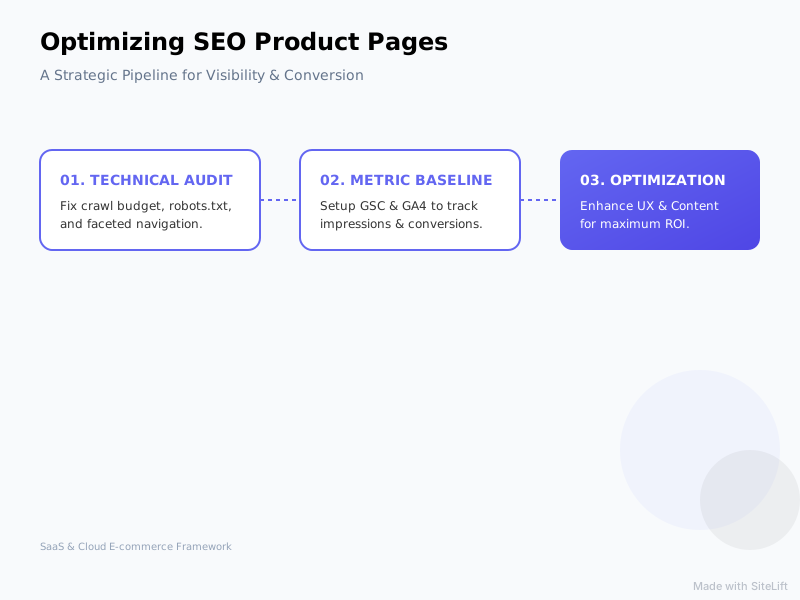
Infographic by SiteLift
Step 5: Master Product Variant Management and Canonicalization
One of the most complex challenges in e-commerce SEO is handling product variants. If you sell a shirt that comes in five colors and five sizes, do you create 25 unique URLs, or do you keep them all on one page?
Handle URL Parameters vs. Dedicated SKU URLs
There are two primary ways to handle variants:
- Single URL with Parameters: The page remains at
example.com/products/classic-shirt, and selecting a variant changes the URL parameter toexample.com/products/classic-shirt?color=blue&size=m. - Dedicated URLs: Every variant gets its own clean URL, such as
example.com/products/classic-shirt-blue-medium.
If the search volume for specific variants is virtually non-existent, stick to a single URL with parameters. If users actively search for specific variants (e.g., "blue silk shirt" vs "white silk shirt"), it may make sense to have dedicated, indexable URLs for those high-intent variants.
Apply Canonical Tags to Prevent Duplicate Content
If you choose to use dedicated URLs or parameters, you must implement strict canonicalization to avoid duplicate content penalties.
Pro Tip: Always point the canonical tag of minor color and size variations back to the primary parent product page unless a specific variant has significant search volume and unique copy.
By consolidating your link equity onto a single "parent" URL, you ensure that search engines do not split your ranking power across dozens of nearly identical pages.
| Variant Strategy | Best For | SEO Impact |
|---|---|---|
| Parameter-based URLs | Products with low variant-specific search volume. | Prevents indexation bloat; concentrates all authority on one URL. |
| Dedicated SKU URLs | High-demand variants with unique keyword search volume. | Captures hyper-targeted long-tail terms, but requires unique copy on every page. |
Step 6: Build Social Proof and Strategic Internal Links
Search engines love active, dynamic pages. By integrating user-generated content and building a smart internal linking structure, you can signal to Google that your product pages are fresh, authoritative, and highly relevant.
Integrate User-Generated Content (UGC) and Reviews
Customer reviews do more than just build trust with potential buyers; they are an absolute goldmine for SEO.
- Fresh Content: Every time a customer leaves a review, they add fresh, unique text to your page, which prompts search engine bots to crawl the page again.
- Natural Long-Tail Keywords: Customers naturally write reviews using the exact conversational language, synonyms, and long-tail phrases that other searchers use when looking for your products.
Create Dynamic Internal Linking Networks
Do not leave your product pages stranded on digital islands. You should actively pass link equity (PageRank) from your high-authority blog posts and category pages down to your individual product pages.
For example, if you have a high-ranking blog post about "What to Wear to a Winter Wedding," insert contextual internal links pointing directly to the specific suits, dresses, or shoes featured in that article. This not only guides search crawlers deeper into your site but also funnels qualified, ready-to-buy traffic directly to your checkout line.
Why SEO Product Pages Are Often Your Best Conversion Funnel (Our Take)
Most brands make the mistake of over-investing in top-of-funnel informational blog posts because they see high traffic numbers in their analytics. But let's be honest: would you rather have 10,000 visitors reading a generic article, or 500 highly targeted visitors landing directly on a product page with their wallets in hand?
In our experience, optimizing your product pages is the single highest-ROI activity you can undertake in e-commerce. It is where search intent meets transactional capability. When you optimize these pages correctly with robust technical foundations, rich schema, and compelling copy, you are not just chasing vanity traffic metrics—you are directly driving revenue growth.
Common Pitfalls to Avoid When Optimizing Product Pages
Even seasoned e-commerce managers fall into common traps that can silently decimate their search visibility. Keep an eye out for these mistakes:
- Deleting Out-of-Stock Product Pages: If a product is temporarily out of stock, do not delete the page or let it return a 404 error. You will lose all the search rankings and backlinks that page has accumulated. Instead, keep the page live, clearly state when the item will return, collect email addresses for back-in-stock notifications, or display highly relevant alternative products.
- Using Manufacturer Boilerplates: As tempting as it is to upload a spreadsheet of manufacturer descriptions, doing so guarantees your site will look identical to thousands of other retailers. Google rarely ranks pages that offer zero unique value over existing search results.
- Thin Content Issues: If your product page contains nothing but an image, a price, and a three-word description, search engines will flag it as "thin content." Aim for a minimum threshold of 200–300 words of unique, helpful copy per page to give search crawlers enough context to rank you.
Expected Outcome: Long-Term Organic Growth and Higher Sales
When you systematically apply these steps, you should expect to see a steady upward trend in your e-commerce organic rankings within 4 to 12 weeks.
As your structured product schema triggers rich snippets in the SERPs, your click-through rates will climb. Simultaneously, the combination of faster mobile load speeds and persuasive, benefit-driven copywriting will naturally lift your on-page conversion rates.
Scaling SEO Operations with Automation
As your store grows from 50 products to 5,000 or more, maintaining this level of optimization manually becomes impossible. To compound your traffic and authority without hiring an army of writers, you must look toward automation.
By integrating intelligent systems like SiteLift, you can automate your content generation, monitor real-time keyword momentum, and maintain a pristine publishing pipeline on autopilot. This allows you to focus on running your business while your search visibility grows in the background.

Ready to scale your organic performance without the manual overhead? Discover how SiteLift can autonomously optimize, publish, and grow your search presence.
— sitelift.io
FAQ
Why are my SEO product pages not ranking on Google?
Your product pages may be struggling to rank due to technical crawl blocks (such as misconfigured faceted navigation), thin or duplicate content copied from manufacturer websites, or a complete lack of high-quality internal and external backlinks. Ensure your pages are indexable, speed-optimized, and contain unique, high-intent copy.
How does product schema markup impact search visibility?
Product schema does not directly improve your organic rankings, but it translates your product details into a format search engines can read. This enables rich snippets—such as star ratings, pricing, and stock status—directly on the SERPs, which can increase your click-through rates by up to 30%.
Should every product variant (color, size) have its own unique URL?
Only if those specific variants have unique search volume (e.g., people actively search for "red leather jacket" vs "black leather jacket"). If there is no search volume for individual variants, keep them on a single page with URL parameters and point their canonical tags back to the main parent product page to avoid duplicate content issues.
Can I use automated product content without getting duplicate content penalties?
Yes, as long as the automated content is high-quality, structured, and customized to your specific products. Avoid low-quality AI spinning. Use smart templates and data-driven inputs to generate unique, descriptive copy at scale, and always include a human editorial layer to verify quality.
How do customer reviews affect e-commerce organic rankings?
Customer reviews are incredibly beneficial for SEO. They provide a continuous stream of fresh, unique content that signals to search engines that your page is active. Additionally, reviews naturally incorporate organic, conversational long-tail keyword variations that your target audience is likely searching for.
Topics Covered:
- seo product pages
- e-commerce organic rankings
- product schema markup
- on-page conversion copy
- automated product content
More from SiteLift

AI for SEO: How to Automate Research, Content Creation and Distribution
Learn how to use AI for SEO to automate keyword research, generative content creation, CMS publishing, and search engine visibility.

SEO Tools in 2026: How to Build an Autonomous Stack That Grows Traffic on Autopilot
Discover how to build an autonomous stack with modern AI SEO tools, automated publishing workflows, and real-time rank tracking to grow organic traffic.

Repurposing Content for SEO: How to Multiply Organic Reach Across Channels
Learn how repurposing content for SEO multiplies organic reach. Discover step-by-step strategies for syndication, AI visibility, and automation.