What is Search Experience Optimization (SXO) and Why It’s the Future of SEO in Europe

For years, digital marketing teams across Europe played a straightforward game: identify high-volume keywords, build backlinks, tweak meta titles, and watch organic traffic climb. But if you have looked at your analytics dashboards recently, you already know that playbook is rapidly losing its power.
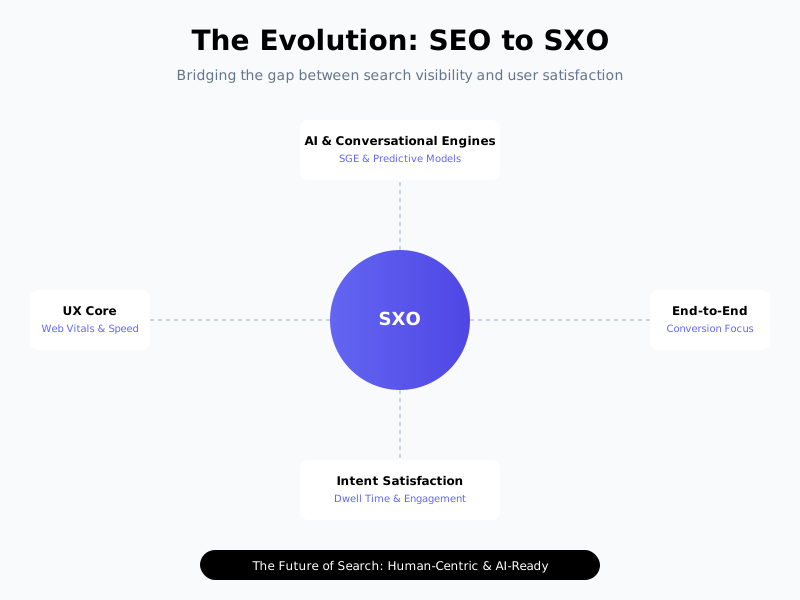
Search experience optimization (SXO) represents the single biggest operational shift in search strategy since Google introduced RankBrain. SXO bridges the historical divide between attracting search traffic and actually satisfying user intent once a visitor lands on your page. According to projections from Gartner, organic search volume to traditional search engines is expected to drop by 25% by 2026 as users flock to generative AI assistants and conversational interfaces.
To survive this shift, brands in the UK, Germany, France, and across the EU must look beyond basic keyword positions. Winning today requires building high-satisfaction search journeys that cater to human visitors and conversational AI engines alike.
Below is a breakdown of how SXO compares to traditional search engine optimization:
Key Takeaways: SXO vs. Traditional SEO
| Strategic Pillar | Traditional SEO | Search Experience Optimization (SXO) |
|---|---|---|
| Primary Metric | SERP Rankings, Impressions, Raw Clicks | Intent Satisfaction, Dwell Time, Conversions |
| User Journey Target | Pre-Click (Meta tags, keywords, backlinks) | End-to-End (Pre-click SERP visibility through post-click conversion) |
| Search Engine Target | Crawl bots and basic indexing engines | Generative AI models, SGE, and User Behavior Signals |
| UX Integration | Secondary (Often treated as an afterthought) | Core Foundation (Core Web Vitals, site speed, clean navigation) |
| European Compliance | Standard privacy disclaimers | Frictionless GDPR consent design and zero-party data optimization |
What Is Search Experience Optimization (SXO) and How Does It Differ From Traditional SEO?
Traditional Search Engine Optimization (SEO) was built for an era when search engines were simple indexing directories. You optimized for bots, won a top-three spot, and assumed your job was done. Search experience optimization, on the other hand, recognizes that getting a user to click your link is only half the battle.
SXO sits at the exact intersection of three distinct digital disciplines:
- Search Engine Optimization (SEO): Securing visibility on search engine results pages (SERPs) and within generative AI answers.
- User Experience Design (UX): Ensuring site visitors enjoy intuitive layout, rapid load times, clear typography, and logical navigation.
- Conversion Rate Optimization (CRO): Guiding the user seamlessly toward a meaningful micro-action (downloading a whitepaper, requesting a demo, or completing a purchase).
   +-------------------------------------------------------+
   |             SEARCH EXPERIENCE OPTIMIZATION            |
   |                         (SXO)                         |
   +---------------------------+---------------------------+
                               |
       +-----------------------+-----------------------+
       |                       |                       |
       v                       v                       v
+--------------+        +--------------+        +--------------+
|     SEO      |        |  UX DESIGN   |        |     CRO      |
| Search Engine|  +--   | User         |  +--   | Conversion   |
| Visibility   |        | Experience   |        | Optimization |
+--------------+        +--------------+        +--------------+
The Convergence of Search Intent, Content Strategy, and User Experience (UX)
When a searcher enters a query into Google, Perplexity, or ChatGPT, they have a specific goal. They want a fast answer, a detailed guide, or a solution to a problem. If your page ranks first but forces the user to navigate a sea of intrusive popups, vague paragraphs, and broken layouts, they will click the back button immediately.
This behavior—known as "pogo-sticking"—signals to modern search algorithms that your page failed to resolve the query. Research by Nielsen Norman Group on UX and SEO confirms that search algorithms increasingly penalize pages that offer poor post-click usability, regardless of how strong their backlink profile might be.
From Keyword Ranking to Intent Satisfaction: Shifting the Core Metric
In the SXO paradigm, intent satisfaction replaces top rankings as your key performance indicator. Search engines evaluate subtle post-click interaction signals to judge whether your content actually solved the user's issue:
- Long Dwell Time: Did the visitor remain on your page long enough to digest the content?
- Low Bounce-Back Rate: Did the visitor stop searching, or did they immediately return to the SERP to click a competitor's link?
- Interaction Depth: Did the visitor click through to related resources, interact with media, or complete a CTA?
- Cumulative Layout Shift (CLS): Did visual elements jump around while the user was trying to read?
If your content answers the query directly and keeps the visitor engaged, search engines mark your page as a high-satisfaction destination.
Why Is SXO Becoming Critical for European Brands in the AI Era?

The European market presents a unique blend of regulatory standards, high consumer expectations, and rapid adoption of generative search tools. Operating a digital business in London, Berlin, or Amsterdam requires a far more refined search approach than operating in markets with looser privacy controls or lower UX standards.
Navigating Generative AI and Search Generative Experience (SGE)
Generative AI tools like Google's Search Generative Experience (SGE), Perplexity, and ChatGPT Search have rewritten the rules of discovery. Instead of providing ten blue links, these engines summarize the web in direct, conversational answers.
To earn citations and visibility in these AI-generated snapshots—a discipline often referred to as AI search engine visibility—your brand's content must be easily parsed and immediately useful. Industry analyses published on Search Engine Land regarding Generative AI's search impact highlight that LLMs prioritize source materials that offer high factual density, explicit structural formatting, and strong user engagement metrics.
If your site delivers a confusing layout, AI crawlers and human visitors alike will bypass your brand in favor of clearer, more direct sources.
Privacy Regulations (GDPR/ePrivacy) and the Shift to Zero-Party Experience Optimization
European brands face a distinct UX challenge that overseas competitors rarely contend with: strict privacy frameworks under GDPR and the ePrivacy Directive.
We have all landed on websites where a massive cookie consent banner obscures 80% of the screen, demanding complex preference toggles before letting us read a single word. This creates immediate user friction.
Data from McKinsey & Company indicates that European consumers are 30% more likely to abandon a brand's website after a single negative digital experience compared to global averages. A clunky cookie banner coupled with slow page loads causes massive immediate bounce rates, which tank your search experience metrics.
SXO forces European digital teams to design privacy-first, frictionless onboarding experiences. This includes:
- Implementing clean, lightweight cookie management interfaces that do not block core content access.
- Respecting user choices without degrading site navigation or speed.
- Leveraging zero-party data (data users voluntarily share through interactive tools, calculators, and quizzes) instead of relying heavily on aggressive tracking scripts.
What Are the Core Pillars of an Effective SXO Strategy?
Building a modern search experience optimization framework requires aligning your technical infrastructure, content development, and interface design into a single pipeline.
+-------------------------------------------------------------------+
|                        THE THREE PILLARS OF SXO                   |
+-------------------------------------------------------------------+
| 1. Technical Foundations  | Core Web Vitals, Mobile, Accessibility|
| 2. Content Relevance      | Semantic Depth, AEO, Natural Language |
| 3. Post-Click UX          | Visual Hierarchy, Micro-Conversions   |
+-------------------------------------------------------------------+
Technical Foundations: Core Web Vitals, Mobile-First Performance, and Accessibility
Technical health forms the baseline of any search experience. If your technical foundation is slow or unstable, no amount of editorial polish will save your organic visibility.
- Core Web Vitals: Google explicitly measures Largest Contentful Paint (LCP), Interaction to Next Paint (INP), and Cumulative Layout Shift (CLS). You can review Google’s official documentation on page experience signals to see how these metrics directly influence SERP outcomes.
- Mobile-First Responsiveness: Over 60% of European organic traffic originates on mobile devices. According to internal data from Google, 53% of mobile site visits are abandoned if pages take longer than 3 seconds to load.
- Accessibility (WCAG Compliance): With the European Accessibility Act (EAA) taking full effect in 2025, digital accessibility is no longer optional. Screen-reader-friendly headings, proper color contrast, and keyboard-navigable menus improve usability for all visitors while helping search bots index your content hierarchy.
Content Relevance: Depth, Answer Engine Optimization (AEO), and Natural Language
Creating content for SXO means designing pages for both human readers and machine readers. This approach, known as Answer Engine Optimization (AEO), focuses on answering queries directly while providing deep context for follow-up questions.
To achieve strong conversational search readiness:
- Address the user's main intent within the first two paragraphs of your content.
- Use structured subheadings (H2, H3) framed as common, natural questions.
- Complement high-level answers with comprehensive background data, statistics, and expert analysis.
- Incorporate Semantic Schema markup (such as
Article,FAQPage, andProductschemas) to help Large Language Models understand relationships between entities.
Post-Click UX: Frictionless Navigation, Clear Visual Hierarchy, and Micro-Conversions
Once a visitor lands on your site, your interface must guide them intuitively toward their goal. Investing in UX yields outsized dividends; research from Forrester demonstrates that a well-designed user experience can increase a website's conversion rate by up to 400%.
To optimize the post-click experience:
- Establish a Clear Visual Hierarchy: Use ample white space, skimmable bullet points, bolded key takeaways, and legible font sizes (minimum 16px for body text).
- Remove Visual Noise: Eliminate aggressive screen-takeover popups, auto-playing video ads, and sticky headers that consume critical mobile screen space.
- Incorporate Contextual Micro-Conversions: Rather than pushing immediate, aggressive sales pitches, offer relevant inline micro-actions. For instance, link to a related resource, embed a simple ROI calculator, or offer a downloadable summary PDF.
How Can European Businesses Implement SXO to Boost AI Search Engine Visibility?
Transitioning from a traditional SEO approach to a modern search experience optimization workflow requires a clear implementation roadmap. Here is how European growth teams can update their strategy for the AI-driven web.
+-----------------------------------------------------------------------+
|                       SXO IMPLEMENTATION ROADMAP                      |
+-----------------------------------------------------------------------+
|  Step 1: Map Intent & Knowledge Graph (Entities, FAQs, Intent Types)   |
|                                  │                                    |
|                                  ▼                                    |
|  Step 2: Streamline Technical UX (INP < 200ms, LCP < 2.5s, GDPR)       |
|                                  │                                    |
|                                  ▼                                    |
|  Step 3: Deploy Automated, High-Satisfaction Content Pipelines        |
|                                  │                                    |
|                                  ▼                                    |
|  Step 4: Measure Intent Satisfaction (Dwell Time, Conversions)        |
+-----------------------------------------------------------------------+
Structuring Knowledge for Generative Search Engines and Large Language Models
To ensure your brand appears in AI search answers across tools like Perplexity, ChatGPT, and Google SGE, you must structure your content as an interconnected web of verified entities and concepts.
- Map Keyword Queries to User Intent: Categorize target topics into Informational, Navigational, Commercial, and Transactional buckets. Never mix conflicting intents on a single landing page.
- Implement Nested JSON-LD Schema: Help search engines parse your entity relationships by deploying structured data markup across all core templates.
- Design "Answer Cards" Within Your Content: Include clear, bold summary sentences immediately below key subheadings. Generative engines frequently scrape these concise blocks for direct search answers.
Pro Tip: When optimizing for European audiences, create explicit regional localization signals. Use localized schema attributes (inLanguage, areaServed) and tailor your examples to local market dynamics rather than relying on generic global content.
Automating Content Pipelines to Scale High-Satisfaction Search Experiences
Maintaining high content standards across multiple European regions and languages manually is difficult to scale. Growth-focused marketing teams are turning to autonomous platforms to streamline publishing pipelines without sacrificing quality or UX.
By leveraging automated content distribution and strategic internal linking networks, brands can continuously publish structured, intent-aligned content designed specifically for modern search engines. Platforms that support real-time keyword tracking, dynamic content optimization, and CMS integration make it possible to scale search experience optimization across vast keyword portfolios with minimal manual overhead.
Why Traditional SEO Is Dead in Europe (And Why SXO Is My Secret Weapon)
An Editorial Perspective by Marcus Vance, Digital Growth Strategist
I have spent over twelve years auditing organic search strategies for B2B and SaaS brands across the UK, Germany, and the Nordics. If there is one pattern I have watched repeat itself over and over, it is this: teams spend tens of thousands of Euros driving clicks to landing pages that completely alienate the visitor.
Two years ago, a mid-market SaaS client came to us in a panic. They held the rank #2 spot for a competitive keyword in Germany, generating over 15,000 monthly sessions. Yet that page yielded almost zero trial signups.
When we audited the URL, the problem was immediately obvious:
- A cookie consent banner covered the main heading on mobile screens.
- The content was an unstructured wall of 3,000 words designed solely for keyword density.
- Key answer summaries were buried at the very bottom of the page.
- Page load time on mobile networks hovered around 5.2 seconds.
Visitors were landing on the site, getting frustrated by the interface, and bouncing right back to Google. When Google updated its helpful content algorithms, that page dropped from rank #2 to page four overnight.
We completely rebuilt the page around search experience optimization:
- We streamlined the cookie banner into a compliant, non-obtrusive bottom panel.
- We moved the direct answer to the query into a prominent summary box above the fold.
- We rebuilt the layout using clean, accessible UI elements with dynamic jump links.
- We cut mobile page load time down to 1.1 seconds.
The results? Within six weeks, organic traffic returned, but the actual conversion rate jumped by 320%. More importantly, the page began earning consistent featured summary citations in Perplexity and Google SGE.
The takeaway is simple: Modern search engines do not care how many backlinks you have built if real human beings hate using your website.
If you want to protect your organic pipeline from AI search disruption, stop treating SEO as a game of keyword stuffing. Start building search experiences that earn attention, deliver fast answers, and make conversion frictionless.
"Ranking first on Google is completely meaningless if your user experience causes 90% of your visitors to hit the back button within five seconds."
— Marcus Vance, Chief Search Strategist
Key Actions for European Growth Teams
To prepare your digital footprint for the SXO era, review this four-step execution checklist:
Audit Your Core Web Vitals and Privacy UX Immediately:
Review your Largest Contentful Paint (LCP) and Interaction to Next Paint (INP) scores across all mobile templates. Ensure your GDPR cookie consent interface is unobtrusive and does not obstruct your main content hierarchy.Re-Architect Content for Conversational AI and SGE:
Update high-priority landing pages with direct, bolded summary answers immediately under key headers. Deploy comprehensive Schema markup to build strong entity connections for LLM engines.Align SEO and CRO Teams Under Shared Metrics:
Stop measuring SEO success purely on organic traffic volume or keyword positions. Hold your search team accountable for user engagement, dwell time, and organic conversion actions.Automate Content Production Pipelines:
Leverage autonomous publishing tools to continuously generate, interlink, and distribute content across your key markets without overwhelming your editorial team.
Frequently Asked Questions About Search Experience Optimization
What is the main difference between traditional SEO and Search Experience Optimization (SXO)?
Traditional SEO focuses primarily on pre-click search engine optimization techniques like keyword targeting, metadata management, and link building to rank higher on search engine results pages. SXO expands this scope by combining classic SEO with User Experience (UX) design and Conversion Rate Optimization (CRO). The goal of SXO is not just driving traffic, but satisfying searcher intent and guiding visitors toward a successful conversion after they click.
How does SXO help improve visibility in AI search engines like Google SGE and Perplexity?
AI search engines use Large Language Models (LLMs) to synthesize direct answers for conversational search queries. These engines prioritize sites that provide clear visual structure, fast technical response times, logical entity hierarchies, and concise direct responses. By adopting SXO principles, your site provides structured knowledge and high post-click engagement metrics that signal your content is a reliable, high-quality source for AI citations.
Why is SXO particularly relevant for European businesses facing strict privacy laws like GDPR?
European websites operate under strict data privacy regulations, requiring cookie consent banners and privacy disclosures. Poorly designed consent overlays create significant post-click friction, leading to high mobile bounce rates and negative user experience signals. SXO helps European businesses design lightweight, compliant privacy workflows that preserve user trust and maintain smooth site navigation without hurting search engine rankings.
What key metrics should digital teams track to measure the success of an SXO strategy?
Instead of tracking keyword rankings and impressions alone, digital growth teams running an SXO program should monitor:
- Core Web Vitals: LCP, INP, and CLS scores.
- Engagement Metrics: Average dwell time, scroll depth, and interaction rates.
- SERP Retention Signals: Reduced pogo-sticking and low immediate SERP return rates.
- Business Outcomes: Organic conversion rate, micro-conversion rates, and overall cost per acquisition (CPA).
Automating Your Search Experience Strategy with SiteLift
Scaling a modern search experience optimization framework across complex, multi-market strategies requires speed, technical precision, and continuous content delivery. Doing this manually for dozens or hundreds of target queries often creates operational bottlenecks for lean marketing teams.
This is where SiteLift transforms your search operations.
SiteLift is an autonomous SEO and AI visibility platform built to help businesses dominate traditional SERPs and generative search engines on autopilot. Instead of spending hundreds of hours managing keyword research, content drafting, manual CMS formatting, and network distribution, SiteLift automates the entire growth engine:
- Autonomous Content Generation: SiteLift continuously publishes structured, intent-aligned, high-satisfaction content optimized for both human visitors and conversational AI engines.
- Seamless CMS Integration: Connects directly with your existing Webflow, WordPress, or custom tech stack to keep your publishing pipeline running smoothly.
- Curated Premium Distribution: Automatically distributes your published assets across high-authority content networks to build meaningful digital authority.
- Real-Time Momentum Tracking: Track how your content performs across standard search engines and AI interfaces with live performance analytics.
By automating your search experience pipelines, your brand can consistently capture organic search intent, engage high-intent visitors, and future-proof your visibility against ongoing search engine updates.
Article generated by SiteLift
Topics Covered:
- search experience optimization
- AI search engine visibility
- SGE optimization
- user experience and SEO
- conversational search readiness
More from SiteLift

Decoding SEO Agency Fees: Hourly Rates, Retainers, and Automated Alternatives
Uncover real SEO agency fees, from hourly rates and $3,000+ monthly retainers to cost-effective automated platforms. Maximize your organic ROI.

SEO Conversion Optimization: How to Turn Organic Search Readers into Paying Customers
Learn how to turn organic search visitors into paying customers with this step-by-step SEO conversion optimization guide. Optimize your CTAs and UX.

How to Choose SEO Audit Companies That Deliver Actionable Automation Roadmaps
Stop paying for static PDFs. Learn how to choose SEO audit companies that deliver developer-ready, automated roadmaps to scale your organic traffic.