The Next Generation of SEO Reporting Software: Moving Beyond Static PDF Reports
 If you run a digital marketing agency or manage search performance for an enterprise brand, you likely know the end-of-month panic. Teams scramble to pull keyword ranks from one platform, traffic stats from Google Analytics 4, and backlink numbers from another tool, pasting them into a standard 30-page slide deck. By the time this document lands in the client's inbox, the data is already out of date. Investing in modern seo reporting software is no longer just about generating prettier charts—it is about abandoning an obsolete operational model that costs agencies thousands of euros every month.
The search ecosystem moves too fast for passive, end-of-month post-mortems. Search engine algorithms update continuously, Search Generative Experience (SGE) features alter click-through rates overnight, and AI engines like ChatGPT and Perplexity now answer user queries directly. Modern brands require live access, revenue attribution, and real-time visibility tracking.
In this guide, we examine why static PDF reports fail modern marketing teams, what features define next-generation seo reporting software, and how autonomous growth systems bridge the gap between reporting data and taking action.
Key Takeaways: Modernising Your SEO Reporting
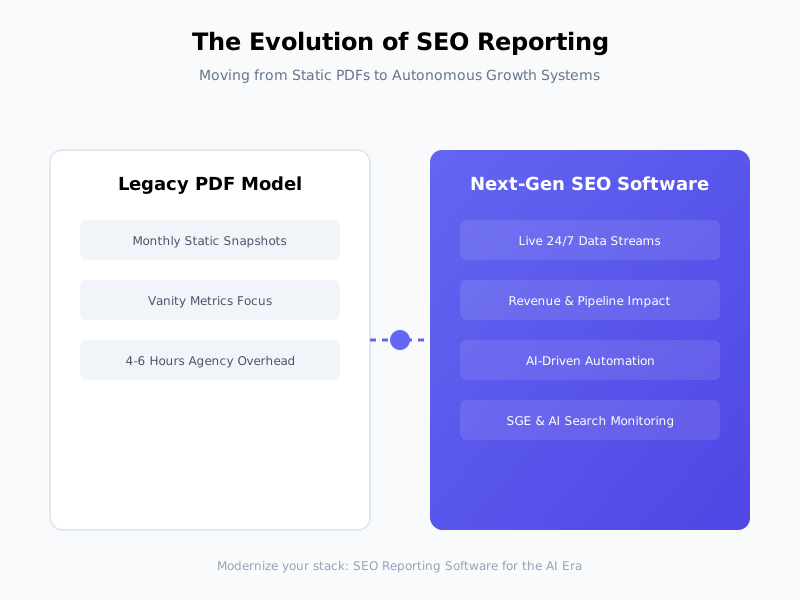
Before diving deep into technical capabilities, here is a quick overview of how traditional monthly reporting compares to next-generation reporting platforms:
| Capability / Metric | Legacy PDF Reporting | Next-Gen SEO Reporting Software |
|---|---|---|
| Data Refresh Rate | Monthly or bi-weekly snapshot | Live, interactive 24/7 updates |
| Primary Focus | Keyword rankings & vanity clicks | Revenue, conversions & pipeline impact |
| AI Search Visibility | Not tracked | ChatGPT, Perplexity, Gemini & SGE monitoring |
| Agency Overhead | 4–6 hours per client/month | Fully automated with anomaly alerts |
| Client Accessibility | Static PDF attachments | Customisable white label SEO reports & live portals |
| Workflow Connection | Passive; requires manual updates | Active; feeds insights into automated publishing |
Why Are Traditional Static PDF SEO Reports Becoming Obsolete?
Static reporting was designed for a slower web. When search engine result pages (SERPs) consisted of ten blue links and updates occurred a few times a year, a monthly summary was sufficient. Today, relying on static decks creates operational drag and hides critical strategic insights.
The Hidden Operational Costs of Manual Data Aggregation
Compiling reports manually drains high-value agency talent. According to Agency Analytics research, digital agencies spend an average of 4 to 6 hours per client every month manually compiling reporting documents. For a medium-sized agency handling 30 clients, that amounts to up to 180 billable hours consumed by copy-pasting numbers between spreadsheets and slide decks.
This operational overhead strains agency profit margins. Account managers spend their time formatting tables and tweaking bullet points instead of analysing user intent, refining conversion funnels, or developing aggressive content strategies.
Delayed Insights in a Rapidly Evolving Search Landscape
When organic visibility drops due to a core algorithm update, a technical indexing fault, or a competitor launching a targeted content campaign, waiting weeks to discover the issue in a scheduled monthly deck is dangerous.
Research from Search Engine Journal indicates that 72% of enterprise marketing managers consider real-time data access critical for making reactive search strategy adjustments. A static report shows you that traffic dropped three weeks ago; a live dashboard alerts you the moment the drop begins so your technical team can resolve it immediately.
The Gap Between Static Data and Actionable Organic Performance Metrics
Legacy decks often focus heavily on vanity metrics—such as aggregate ranking movements across hundreds of low-intent keywords—while ignoring actual business impact. Executives do not buy software subscriptions or approve retainers based on average rank positions; they care about qualified leads, sales pipeline, and revenue attribution.
Static documents make it nearly impossible to filter data interactively. When a client asks how a specific content cluster impacted conversions in Germany versus the UK, an account manager usually has to say, "I'll get back to you next week with a custom report." Modern platforms solve this by surfacing live organic performance metrics connected directly to business outcomes.
 ---
---
What Defines Next-Generation SEO Reporting Software?
The modern reporting stack moves away from flat files, replacing them with dynamic, interactive platforms that serve as a single source of truth for both internal growth teams and external stakeholders.
Interactive, Real-Time SEO Dashboards
Next-generation seo reporting software gives clients access to real-time SEO dashboards. Rather than waiting for a PDF attachment at the end of the month, brand managers can log into a secure client portal at any time to review real-time organic progress.
These interactive portals allow users to adjust date ranges, isolate specific geographical markets across Europe, and drill down into individual URL performance. If you want to learn more about structuring effective client dashboards, check out Search Engine Journal's detailed breakdown on building real-time interactive dashboards.
Automated Client Reporting with Intelligent Anomaly Detection
Moving to real-time access does not mean abandoning automated summaries. Modern platforms use automated client reporting workflows that send scheduled executive summaries alongside instant anomaly notifications.
A study by HubSpot reveals that agencies utilizing automated client reporting experience a 23% higher client retention rate compared to those relying on manual monthly decks. Automatic alerts inform your team the moment a high-value landing page loses rankings or experiences a sudden traffic surge, enabling proactive client communication before the client even notices the shift.
Seamless White Label SEO Reports for European Agencies
For growth agencies operating across the UK, DACH, and Nordics, brand consistency is paramount. Enterprise clients expect reporting portals that reflect the agency's primary domain, design system, and custom styling.
Advanced reporting software delivers fully customisable white label SEO reports. Agencies can host live dashboards on their own custom subdomains, apply custom CSS themes, custom-brand PDF exports, and provide dedicated client logins. This positions the agency as an innovative technology partner rather than an overworked service provider.
How Does Modern Reporting Connect SEO to Revenue and AI Engine Visibility?
The definition of "search" is undergoing its biggest transformation in two decades. Consequently, the tools we use to measure organic reach must look beyond traditional SERP position tracking.
       [ Legacy SEO Reporting ]                      [ Next-Gen Autonomous Stack ]
+------------------------------------+        +------------------------------------+
|  Static Monthly PDF Exports         |        |  Real-Time Interactive Dashboards   |
|  Manual Data Aggregation (4-6 hrs) |   ==>  |  Automated Anomaly Detection       |
|  Traditional Rank Tracking Only    |        |  AI Answer Engine Prominence Track |
|  Disconnected from Content Workflows|        |  Live CMS Publishing Integration   |
+------------------------------------+        +------------------------------------+
Tracking Beyond Google: Measuring AI Search Engine Prominence
Traditional rank tracking measures where your URL sits on a standard Google page. However, generative engines like ChatGPT, Perplexity, Gemini, and Google Search Generative Experience (SGE) now provide direct answers to complex conversational queries without requiring a traditional organic click.
Gartner forecasts that traditional search engine traffic volume will decrease by 25% by 2026 due to AI chatbots, making multi-platform AI visibility reporting essential. Next-gen reporting software tracks brand citations, prompt inclusions, and answer engine visibility scorecards alongside standard desktop and mobile rankings.
Attributing Organic Traffic to Multi-Touch Conversion Pipelines
Modern search platforms connect ranking data with CRM tools (such as HubSpot, Salesforce, and native analytics platforms). This allows marketing leaders to attribute organic performance directly to closed deals.
Instead of reporting "Keyword X moved from position 4 to position 2," next-gen reporting software shows: "Keyword X drove 1,200 organic visits, resulting in 42 demo requests and €85,000 in new ARR this quarter."
Automating the Bridge Between Content Creation and Ranking Momentum
Reporting should not exist in an isolated vacuum. The real value of reporting data emerges when it directly feeds back into your content production pipeline.
When performance tracking reveals that a key cluster is losing momentum or that an emerging search intent has surfaced, your team should not spend two weeks writing a brief, assigning it to a freelancer, and manually scheduling it. Autonomous systems like SiteLift close this loop entirely. By connecting real-time keyword tracking directly with automated content generation and publishing pipelines, software can automatically generate and distribute optimized content to recapture ranking momentum on autopilot.
 ---
---
What Should Agencies and Enterprises Look for in SEO Reporting Platforms?
When evaluating new software options for your agency or enterprise growth team, focus on integration breadth, customisation, and strict regulatory compliance.
Native CMS Integrations and Multi-Channel Data Pipelines
A reporting platform is only as useful as the quality of its data connections. Look for tools that offer direct integrations with Google Search Console, GA4, Bing Webmaster Tools, and popular Content Management Systems like WordPress, Webflow, and Shopify. For a broader framework on structured metric selection, consult Search Engine Land's strategic guide on modern SEO reporting frameworks.
Customisable Governance, Access Control, and Automated Scheduling
Enterprise brands often require complex permissions structures. Regional team managers in Paris might only need access to French language directories, while global directors require full visibility across all European territories. Ensure your platform supports multi-tenant user access, granular role permissions, and customized automated delivery schedules tailored to different stakeholder groups.
Strict GDPR Compliance and European Data Privacy Standards
Data privacy regulations are exceptionally strict across the European Union and the United Kingdom. When handling client data, user telemetry, or CRM integrations, your reporting infrastructure must adhere to high standards of compliance.
Ensure your chosen platform uses servers based in Europe, abides by clear privacy rules, and strictly adheres to official GDPR compliance guidelines. You can review how enterprise platforms manage user data security by reviewing SiteLift's privacy policy.
Editorial: Why Static Reporting Belongs in the Past
I have sat in dozens of agency boardroom meetings over the past decade, watching account executives present 40-page PDF reporting decks. In almost every instance, the client flipped directly to the last slide to check conversions, ignoring the carefully formatted ranking charts in the middle.
The industry's reliance on manual monthly PDF reports has always been about preserving agency billable hours, not delivering genuine client value. Compiling manual reports creates an illusion of work, shielding teams from the reality that static rankings say very little about true business growth.
Pro Tip: If your agency currently spends more than two hours per client every month building PDF decks, stop immediately. Shift your clients to a live dashboard link and reallocate those billable hours toward automated content generation and strategic technical fixes.
In my opinion, the future of search growth belongs to platforms that unite reporting and execution into a single, continuous feedback loop. Measuring visibility and generating content should not be separate tasks. When an automated platform detects a drop in organic momentum, it should immediately trigger content optimization workflows to fix it.
Pro Tip: When selecting a new platform, test its ability to track conversational query visibility on ChatGPT and Perplexity. If a reporting tool only tracks traditional Google desktop rankings, you are purchasing software that is already outdated.
— Marcus Vance, Head of Growth Strategy at SiteLift
Bridging Reporting and Action with SiteLift
 Traditional reporting tools tell you what went wrong last month. SiteLift's autonomous SEO platform changes the paradigm by combining real-time visibility tracking with an automated content publishing engine.
Rather than spending dozens of hours collecting data into static PDFs, sitelift.io tracks your keyword momentum continuously and takes action automatically. The platform identifies content gaps, generates targeted content, distributes it across a curated network, and integrates directly with your existing CMS to build long-term organic traffic on autopilot.
If you are ready to move past manual reporting decks and scale your search strategy with modern automation, explore how SiteLift can streamline your publishing pipeline today.
FAQ
Why should agencies move away from monthly PDF SEO reports to real-time dashboards?
Monthly PDF reports consume hours of manual labor, deliver outdated data by the time they are read, and fail to alert teams to sudden algorithm drops or performance shifts. Real-time dashboards give clients transparent 24/7 access to live metrics, saving agency time and allowing teams to make strategic adjustments immediately.
What is white label SEO reporting software and why does it matter for growing agencies?
White label SEO reporting software allows digital agencies to brand client portals, reports, and dashboards with their own logos, colors, domain names, and styling. This presents a professional image to enterprise clients, increases brand trust, and helps position the agency as a technology-driven provider.
How does automated client reporting improve agency client retention rates?
Automated client reporting keeps clients informed without requiring account managers to manually build decks every month. By delivering clear, real-time metrics alongside instant anomaly alerts, agencies maintain transparency and demonstrate ongoing ROI, leading to a 23% higher client retention rate on average.
Can next-generation SEO reporting software track visibility across AI answer engines like ChatGPT?
Yes. Next-generation platforms look beyond traditional Google SERPs to track brand mentions, answer inclusions, and visibility scores across generative AI engines like ChatGPT, Perplexity, Google Gemini, and Search Generative Experience (SGE).
Article generated by SiteLift
Topics Covered:
- seo reporting software
- real-time SEO dashboards
- automated client reporting
- organic performance metrics
- white label SEO reports
More from SiteLift

SEO Tools in 2026: How to Build an Autonomous Stack That Grows Traffic on Autopilot
Discover how to build an autonomous stack with modern AI SEO tools, automated publishing workflows, and real-time rank tracking to grow organic traffic.

Repurposing Content for SEO: How to Multiply Organic Reach Across Channels
Learn how repurposing content for SEO multiplies organic reach. Discover step-by-step strategies for syndication, AI visibility, and automation.

Fresh Content SEO: How Publishing Frequency and Recency Drive Rankings
Discover how fresh content SEO, publishing velocity, and Google's QDF algorithm impact rankings and AI search visibility. Build a scalable freshness engine.